




Messaging from the Bundu: The Garmin InReach Mini 2 vs. The New Mini 3 Plus
In an emergency, getting a message out can be a matter of life and death. In a remote location, your cellphone may not be able to come to your rescue. Carrying a satellite device can literally save your life.
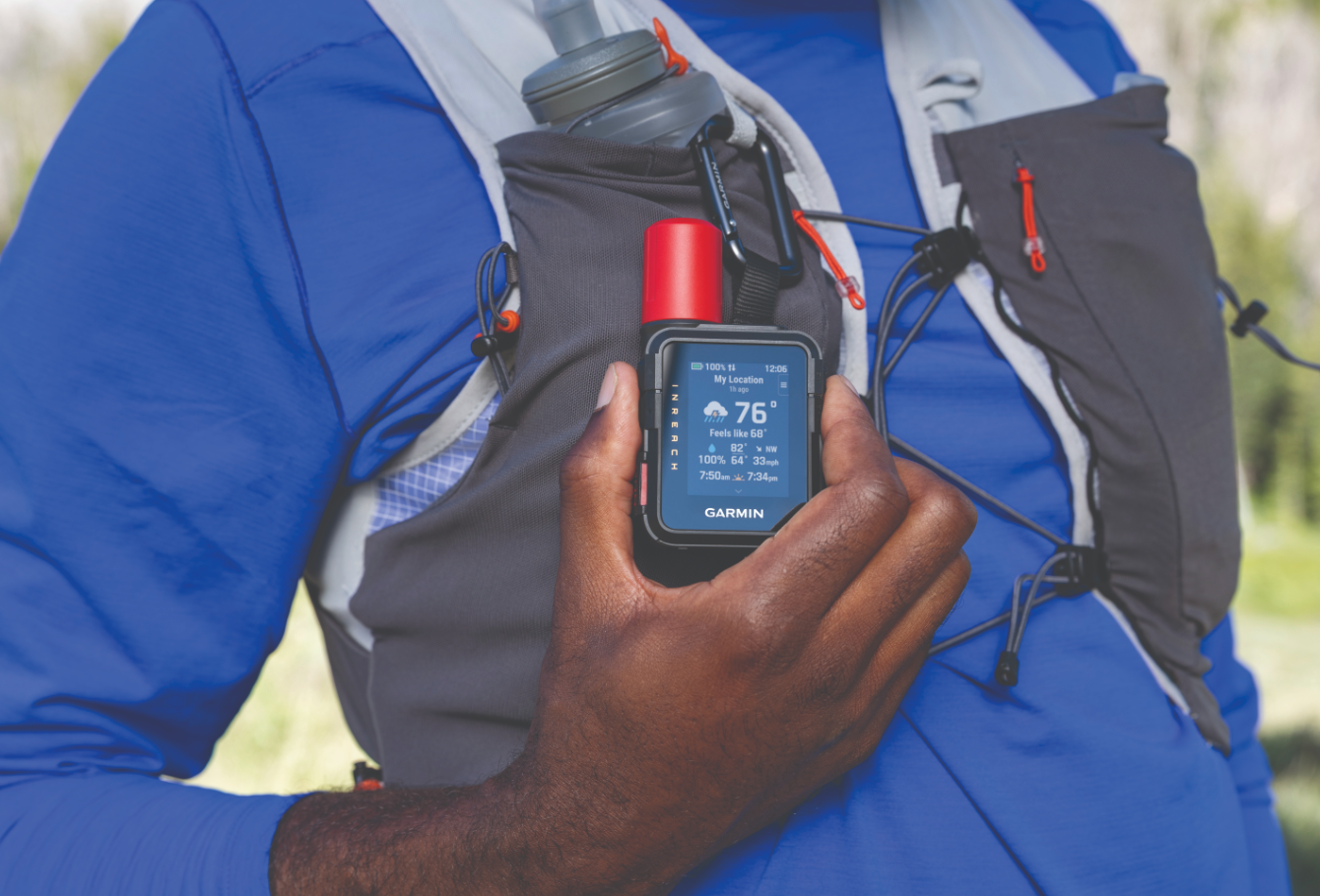
For years, the gold standard for satellite communication has been a small, orange-and-black box that does very little, but does it perfectly: it sends your location and lets you text from anywhere on Earth. However, Garmin’s latest release, the InReach Mini 3 Plus, represents the biggest leap in the series to date. It moves the device away from being a “break glass in case of emergency” tool and toward being a fully functional communication hub.
If you are preparing for a multi-day trek or a remote solo expedition, choosing between the classic Mini 2 and the upgraded Mini 3 Plus comes down to whether you value minimalist weight or modern connectivity.
It now has maps
The inclusion of a dedicated map view on the Mini 3 Plus is a significant departure from the Mini 2, though it functions more as a “smart” orientation tool than a replacement for a full-scale GPS. While the Mini 2 provides only a blank-screen breadcrumb trail (a simple line showing where you’ve walked), the Mini 3 Plus takes advantage of its new colour display to show a basic world basemap. This means you can see your location relative to major landmarks, roads, or coastlines directly on your wrist or pack. However, it is important to note that this on-device map is quite simplified to save memory and battery; for high-detail TopoActive maps or satellite imagery, you’ll still want to pair the device with the Garmin Explore app on your phone, where the Mini 3 Plus serves as a high-precision antenna for the detailed maps on your screen.
The Screen: From Buttons to Touch
The most immediate change is the interface. The Mini 2 uses a monochrome screen and physical side buttons. While reliable, typing a custom message on the device itself is a slow process of scrolling through the alphabet.
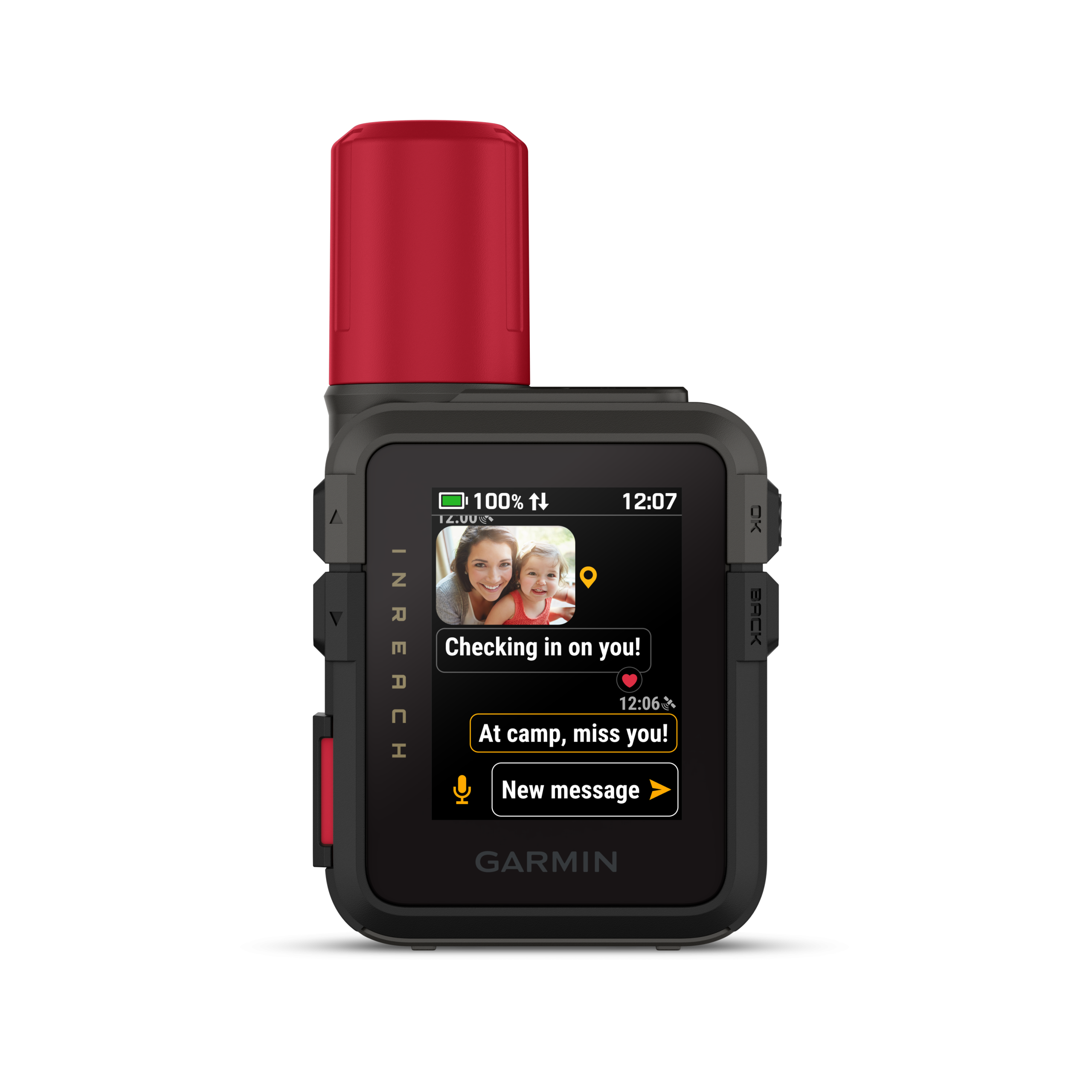
The Mini 3 Plus introduces a 1.9-inch color touchscreen. This change completely transforms the user experience, allowing for an on-screen QWERTY keyboard. If your smartphone battery fails or the Bluetooth connection drops, the Mini 3 Plus remains a fast, easy-to-use communicator, whereas the Mini 2 becomes significantly more cumbersome to operate manually.
Beyond Text: Photos and Voice Notes
The “Plus” in the new model refers to a massive expansion in data capabilities. For the first time in a device this size, you can send and receive 30-second voice notes and photos via satellite.
While the Mini 2 is strictly limited to text and GPS coordinates, the Mini 3 Plus allows you to share the actual atmosphere of your journey. You can snap a photo of a trail marker or a sunset and send it to your contacts, or listen to a voice note from home. This feature requires the Garmin Messenger app, but the photos can actually be viewed (at a lower resolution) directly on the device’s new color screen.
Precision in the Wild
Under the hood, the navigation technology has received a professional-grade boost. The Mini 3 Plus utilises multi-band (dual-frequency) GNSS. In practical terms, this means the device can lock onto satellites more effectively in “high-multipath” environments – think deep valleys, dense forest canopies, or high-altitude peaks where signal bounce can cause traditional GPS to drift. The Mini 2 is highly capable, but the Mini 3 Plus offers the kind of pinpoint accuracy usually reserved for high-end handheld mapping units.

Size, Weight, and Reliability
Despite the new tech, Garmin has kept the Mini 3 Plus remarkably compact. It has gained about 25 grams, bringing it to roughly 125g. For most hikers and cyclists, this is a negligible difference, but for “ultralight” enthusiasts, the 100g Mini 2 still holds a slight edge.
Battery life remains impressive on both. While the touchscreen and advanced GPS on the Mini 3 Plus require more power, Garmin has outfitted it with a larger internal battery to compensate. Both devices utilise USB-C charging, making them easy to top up with a standard power bank.
ALL THAT says:
The inReach Mini 2 remains a fantastic choice if you want a lightweight safety net that you hope to never actually use. It is a set-it-and-forget-it tool for those who prioritise weight and simplicity.
The inReach Mini 3 Plus is the better choice for those who want to stay actively connected. If you enjoy sharing updates with family, need a device that is easy to type on in a pinch, or frequently travel in terrain where GPS signals struggle, the upgrade is well worth the investment. It isn’t just a beacon anymore; it’s a bridge back to the world.
Side by side
Inreach Mini 2 |
Inreach Mini 3 Plus |
|
Price |
R8 799 (look for specials) | R12 499 |
Weight |
100g | 125g |
Screen |
0.9” x 0.9” B&W | 1.52” x 1.14” Colour Touch |
Input method |
Buttons only | Touchscreen + buttons |
Battery |
1250 mAh (about 12 days) | 1800 mAh (about 13 days) |
Transmit power |
1.51 watts | 2.63 watts |
GPS |
Standard | Multi-band GNSS |
Maps |
None | Detailed topographic |
Text messaging |
Yes (via buttons) | Yes (via touch keyboard) |
Voice messages |
No | Yes (via satellite) |
Photo Messaging |
No | Yes (via satellite) |
Emergency siren |
No | Yes (95dB) |
Phone charging |
No | Yes (USB port) |
Speaker/microphone |
No | Yes |
Water rating |
IPX7 | IP67 |
Carabiner included |
Yes | Yes |
SOS Emergency |
Yes | Yes |
Price
The Inreach Mini 2 is about R7499 and the Inreach Mini3 about R10 999 at takealot.com
This article was not sponsored but contains affiliate links. If you make a purchase through these links, ALL THAT will receive a small commission at no extra cost to you. All opinions expressed are those of the editorial team.
Also read
Nike’s Swooshfly promises carbon-plate benefits for slower runners. Here’s what the science really says
Gerda Engelbrecht At the latest Nike launch event, the Apex and Alphafly 4 may have been the headline act, but it’s the new Swooshfly that’s stole...
Apple’s double launch: Should you upgrade to the iPhone 18 Pro now, or wait for the Duo?
Gerda Engelbrecht Apple has shaken up its traditional September release schedule, delivering not one but two distinct flagship experiences: the photog...

The art of decanting: The smart way to serve wine at its best
Gerda Engelbrecht We tested a temperature-controlled decanter from Solenco and it solved one of wine service’s most annoying problems. If you’ve e...