



The art of decanting: The smart way to serve wine at its best
Gerda Engelbrecht
We tested a temperature-controlled decanter from Solenco and it solved one of wine service’s most annoying problems.
If you’ve ever tried to properly decant a bottle of wine at home, you’ve likely encountered an irritating paradox: decanting improves the wine’s flavour, but by the time it’s properly aerated, your carefully chilled bottle has warmed to room temperature. Or worse, you’ve resorted to that dripping ice bucket that leaves puddles on your table and keeps you guessing whether the wine is too cold or finally ready.
The Solenco Life Wine Cooler With Decanter addresses this problem with surprising elegance. After testing it with everything from young Stellenbosch Cabernet to aged white Chardonnay, we can confirm it works brilliantly – and solves a problem we didn’t fully appreciate until we’d used one.
Why decanting actually matters (it’s not just theatre)
Before we get into our testing, it’s worth understanding why decanting isn’t merely performative wine snobbery. There’s genuine science here.
When wine meets oxygen, two things happen. First, volatile compounds – particularly sulphurous aromas that develop during bottle ageing – evaporate, revealing cleaner, more expressive fruit notes. Second, and more importantly for young red wines, oxygen triggers a process called polymerisation. Tannin molecules bind together into larger structures, reducing that harsh, mouth-puckering astringency and making the wine noticeably smoother within minutes.
Research published in the Journal of Separation Science confirmed what sommeliers have long known: decanting measurably reduces the concentration of organic acids and polyphenols, resulting in a more balanced, approachable wine.
So yes, decanting works. But it creates that temperature problem.
The problem with traditional decanters
A standard glass decanter sits on your table or sideboard, gradually warming to ambient temperature. During our testing in a typical dining room (around 22°C), a chilled Chardonnay climbed from 10°C to 16°C in just 25 minutes. That’s far too warm for a white wine, and the delicate aromatics we’d hoped to coax out through aeration had largely evaporated.
Ice buckets maintain temperature but don’t allow proper aeration – the bottle neck barely exposes wine to air. Plus they’re awkward, drippy and require constant refilling. We tried the comparison: a young Pinotage in an ice bucket versus the same wine in the Solenco. The difference was immediately apparent.
How we tested it
We used the Solenco Life Wine Cooler over three weeks with various wines: a 2019 Cabernet Sauvignon from the Stellenbosch region that needed taming, a 2020 Syrah from the Swartland with reductive aromas, a full-bodied Chardonnay, and a cooler-climate Pinot Noir that drinks best around 14°C.
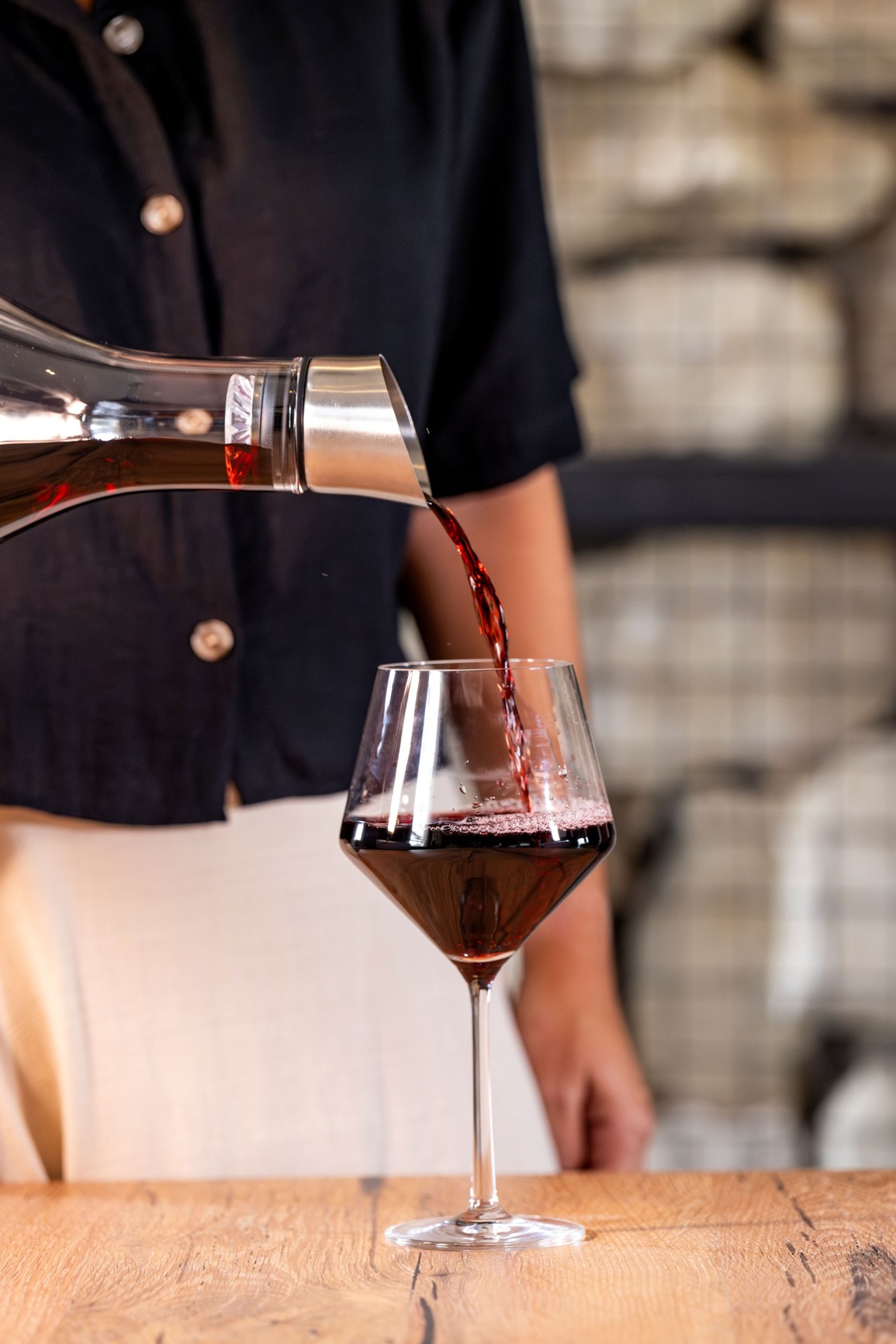
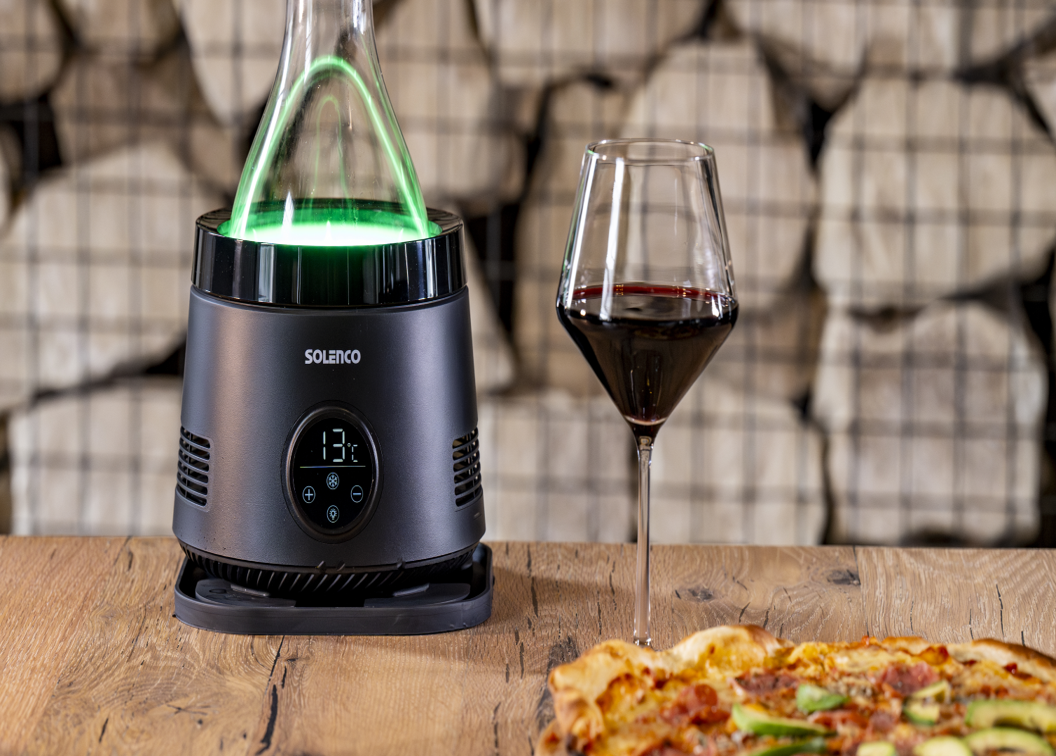
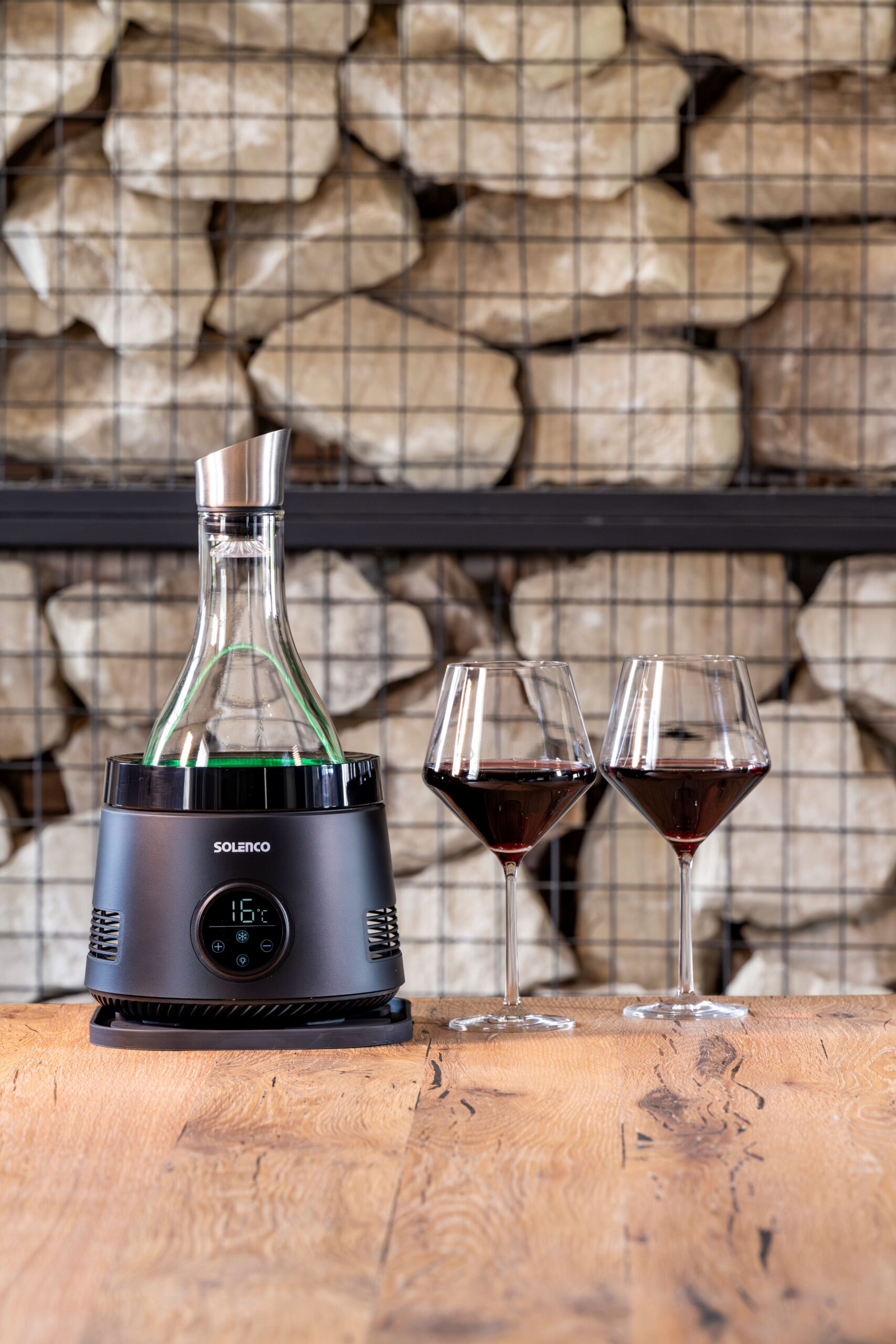
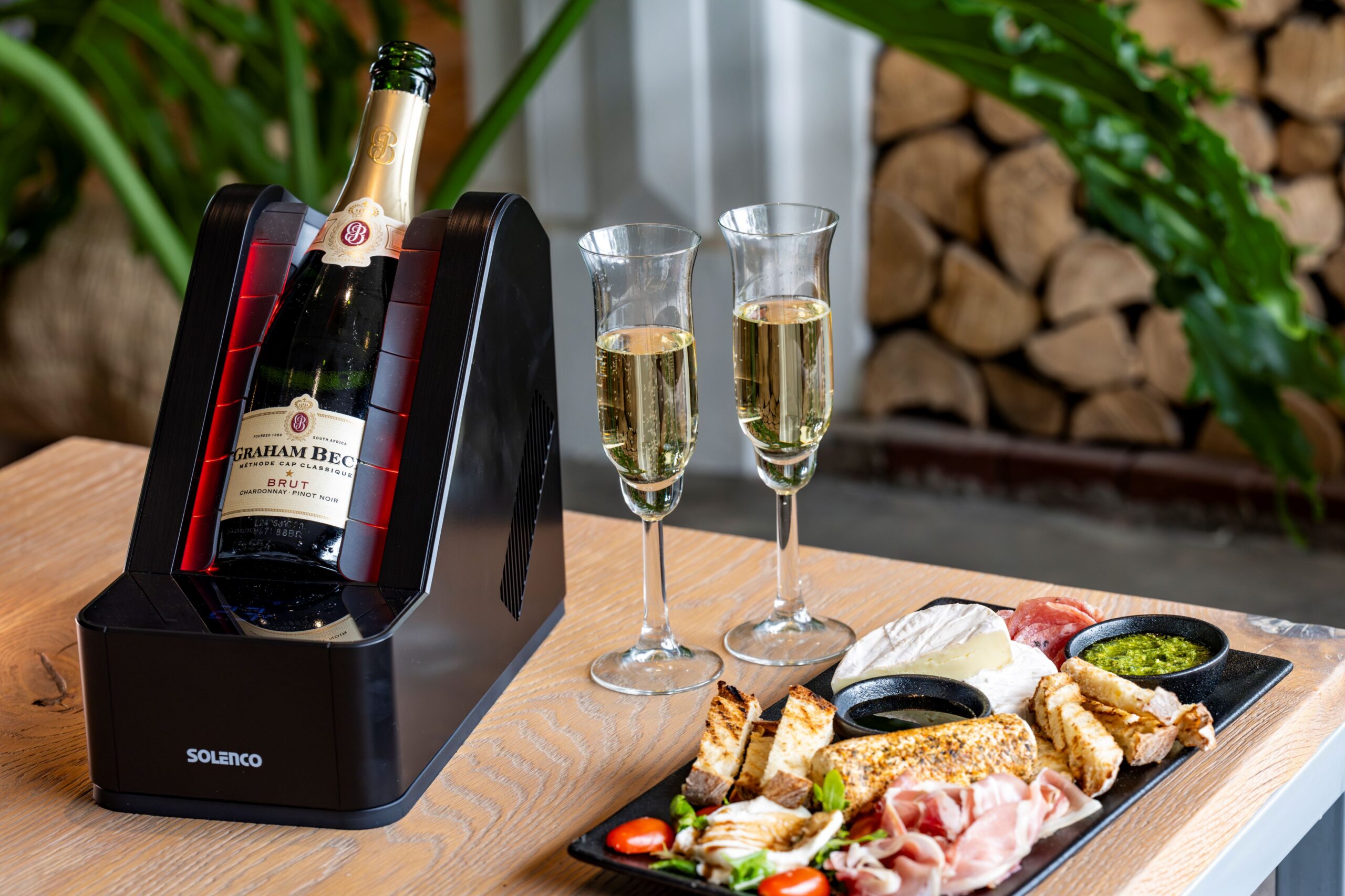
The process is straightforward. Pre-chill your wine to roughly the temperature you want (or cooler), pour it into the borosilicate glass decanter, place the decanter in the cooling chamber, and set your desired temperature using the digital controls. The device maintains that temperature whilst the wine aerates.
What impressed us most was the consistency. Set it to 16°C for a young red, and it stayed at 16°C. During a dinner party that ran three hours, a Syrah we’d decanted at 6pm was still at perfect drinking temperature when we finished the bottle well past 9pm.
The wide-based decanter provides excellent surface area for aeration. The young Cabernet, which tasted closed and tannic straight from the bottle, opened up beautifully after 45 minutes in the Solenco. The reductive Swartland Syrah, which initially had those struck-match aromas, cleaned up within 20 minutes as the volatile compounds evaporated.
What it does well
Temperature precision: The thermoelectric cooling is genuinely accurate. We checked with a wine thermometer and found the displayed temperature matched reality within a degree.
Quiet operation: Unlike compressor-based wine fridges, the thermoelectric system is nearly silent. Useful if it’s sitting on a sideboard during dinner conversation.
Energy efficiency: At 60W, it’s considerably more frugal than running a wine fridge. We left it on for an entire evening without guilt.
Presentation: The ambient lighting and glass decanter make for a more elegant table presence than an ice bucket. Guests consistently asked about it.
Versatility: The 5°C to 20°C range covers everything from well-chilled bubbly to cellar-temperature red wine. We used 8°C for white wines, 14°C for lighter reds, and 16°C–18°C for bigger reds.
Just remember
The thermoelectric system maintains rather than creates chill. You’ll need to pre-cool wine in a refrigerator first – it won’t rescue a room-temperature bottle. This isn’t really a limitation; it’s just understanding what the device is designed to do.
For everyday drinking with simple, drink-now wines, honestly, you don’t need this. A basic decanter works fine if temperature drift doesn’t bother you. This is for occasions when wine quality justifies the extra attention.
ALL THAT says
We were initially sceptical about whether this solved a real problem or merely added complexity to wine service. After three weeks of testing, we’re convinced it’s the former.
The Solenco Life Wine Cooler With Decanter excels at something traditional decanters can’t do: it lets wine breathe whilst keeping it at optimal serving temperature. That’s genuinely useful, particularly for South African wine enthusiasts who collect structured, age-worthy reds or appreciate complex white wines that deserve proper presentation.
But here’s where it becomes unexpectedly practical: boxed wine. Quality bag-in-box wines have become increasingly common in South Africa – lots of respectable wine are being sold in this format. They’re excellent value and stay fresh for weeks, but you don’t really want to put a cardboard box on the table when you’ve made an effort with dinner. Pour that boxed Chenin Blanc or Pinotage into the Solenco decanter, and suddenly your R100 everyday wine gets the same treatment as a special-occasion bottle. The wine benefits from aeration (many boxed wines taste noticeably better after breathing), stays at the correct temperature, and looks appropriate for the table. It’s the best of both worlds: the economy of boxed wine with the presentation of bottled.
At R2399, it sits at the higher end of wine accessories, but it delivers measurably better results than the ice-bucket-and-decanter combination most of us currently use. The compact footprint (20,6 × 20,6 × 33,2cm) means it doesn’t dominate your counter, and the two-year warranty provides reasonable peace of mind.
This isn’t essential kit for casual wine drinkers. But if you regularly buy wine that genuinely benefits from decanting, and you’ve grown frustrated watching it warm up or resorting to inelegant ice buckets, the Solenco works brilliantly. We’ll be keeping ours.
Buy it HERE from takealot.com or directly from Solenco.
This article was not sponsored but contains affiliate links. If you make a purchase through these links, ALL THAT will receive a small commission at no extra cost to you. All opinions expressed are those of the editorial team.
Also read

Apple’s double launch: Should you upgrade to the iPhone 18 Pro now, or wait for the Duo?
Gerda Engelbrecht Apple has shaken up its traditional September release schedule, delivering not one but two distinct flagship experiences: the photog...

I tested the Garmin Edge 1050 over 230 km (and 17 and a half hours) and this is why I love it…
How the Garmin Edge 1050 (a.k.a.
The 20-Minute Window: Why your wine only tastes perfect for a few moments
Wilmer Muller TESTED: If you regularly treat yourself to expensive wine, you should also treat yourself to a gadget to serve it properly. We tested th...