

Nike’s Swooshfly promises carbon-plate benefits for slower runners. Here’s what the science really says
Gerda Engelbrecht
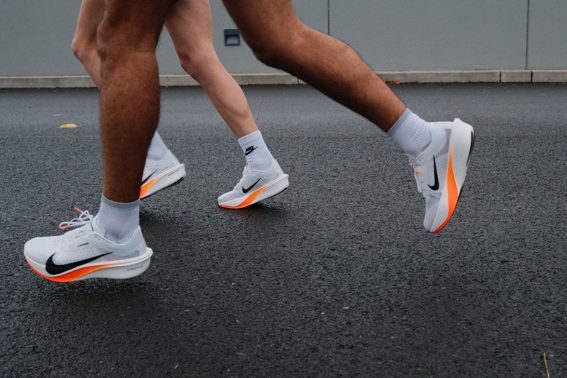
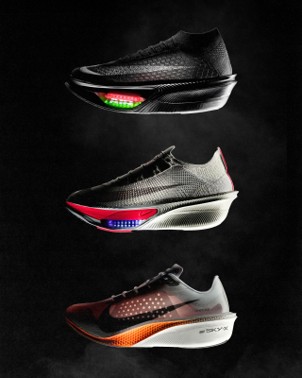
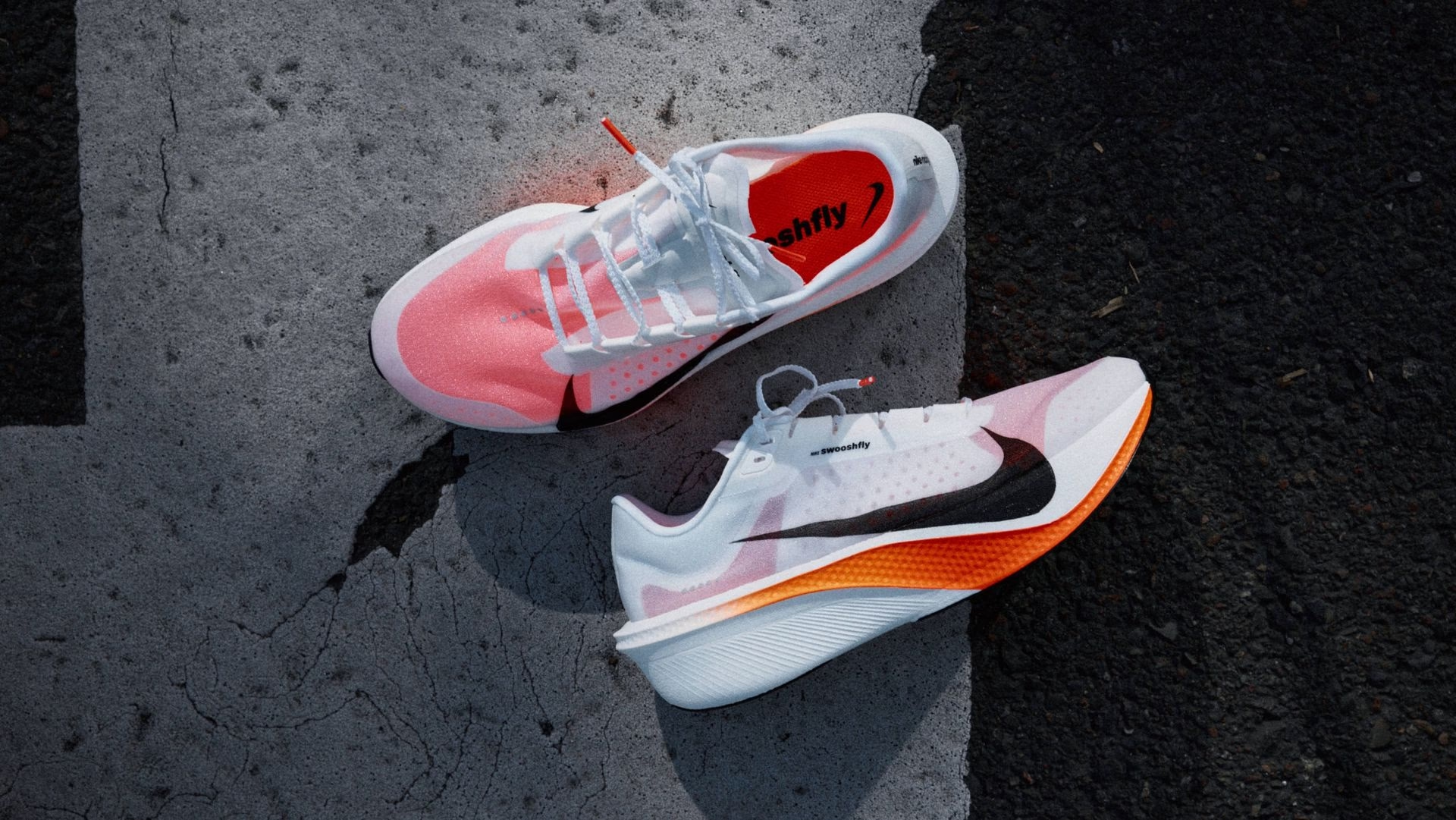
At the latest Nike launch event, the Apex and Alphafly 4 may have been the headline act, but it’s the new Swooshfly that’s stolen the show. Announced on 30 September 2026 and dropping globally in February 2027, Nike’s latest carbon-plated supershoe isn’t built for elites – it’s built for the rest of us. That’s a bold pivot. And it begs a question runners everywhere are already asking: can slower runners actually benefit from carbon-plated shoes, or is this clever marketing dressed up in foam and fibre?
As someone who recently got back into running after years of hiking, this question is personal for me. I’m averaging 7 minutes per kilometre over 10km – and slowing down meaningfully after that. I’m training towards a 21km early in 2027, with the tentative idea of seeing whether a full marathon in 2028 might be on the cards. So when a shoe brand claims their carbon-plated racer is built for runners like me, I want to know if the science backs it up.
Why carbon-plated shoes were originally reserved for elites
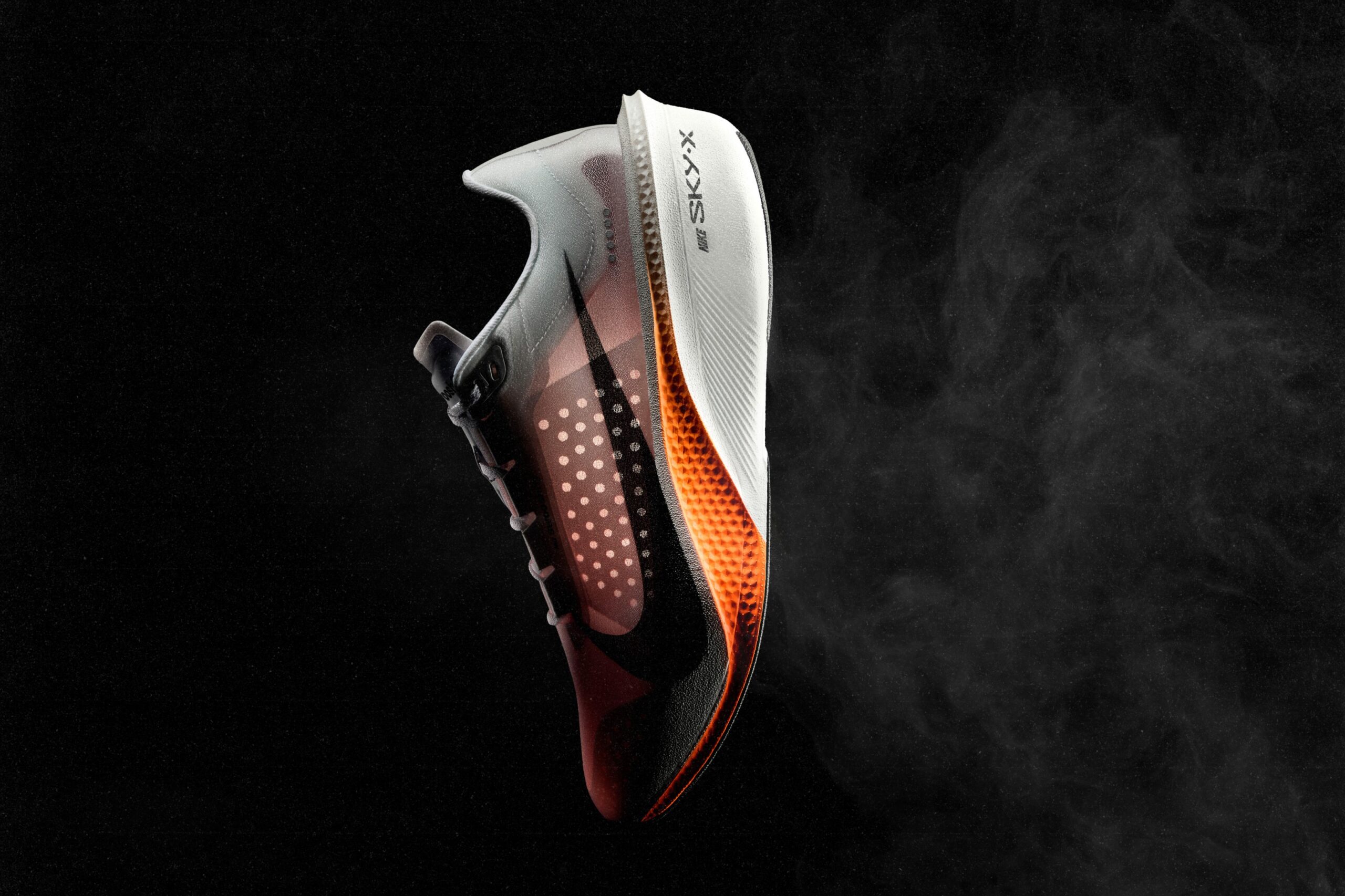
When Nike introduced the first Vaporfly and Alphafly, the biomechanical logic was straightforward: a carbon plate embedded in a thick, high-resilience foam midsole stores and releases energy through the forefoot, propelling you forward with each stride. Unlocking that mechanism requires sufficient forefoot force – which broadly means running fast, with a forefoot strike and the powerful, high-cadence gait that characterises elite distance runners.
Slower runners, the thinking went, simply didn’t generate the mechanical input needed to make the plate spring. Worse, the plate’s stiffness could disrupt a slower runner’s natural stride, redistributing load without delivering the promised energy return. Early research broadly supported this caution, and supershoes were widely regarded as tools for the sub-three-hour crowd only. In other words, more Gerda Steyn and less Gerda Engelbrecht.
Why that thinking has changed
The science has since caught up – and it tells a more encouraging story.
A 2026 meta-analysis of 14 studies published in Frontiers in Sports and Active Living confirmed that carbon-plated footwear reduces the metabolic demand of submaximal running by an average of approximately 2,75% compared to non-plated shoes. Crucially, this held across a wide range of speeds, including slow jogging paces as low as 7,5km/h. A separate 2026 study reported a consistent 2,5% reduction in oxygen cost across all tested speeds, suggesting the metabolic benefit doesn’t evaporate at slower paces.
To put that in real-world terms: for a four-hour marathon runner, a 2,75% efficiency gain translates to a potential improvement of over seven minutes. That’s not marginal.
A 2025 study in Footwear Science found that recreational runners achieved improved running economy at speeds as slow as 10km/h in carbon-plated shoes, with reduced heart rates and lower perceived effort at steady-state training paces – suggesting the benefit shows up in how hard a run actually feels, not just in a lab.
Where it gets more complicated
Here’s where I’d urge caution. A 2026 study in BMC Sports Science, Medicine and Rehabilitation found that how the body adapts to carbon-plate stiffness differs significantly by experience level. Experienced runners adapted at the ankle and forefoot – exactly where the shoe is designed to engage. Novice runners, however, showed increased mechanical demand at the knee, with higher peak knee extension moments and greater knee negative work.
In plain language: if you’re new to running, you may be absorbing the shoe’s stiffness through your knee rather than benefiting from it through your forefoot. That doesn’t necessarily cancel out the metabolic gains, but it raises a real concern around knee stress over longer distances.
A 2026 systematic review in Frontiers in Sports and Active Living found no consistent global changes in joint mechanics across studies, pointing to adaptations that are highly individual and localised at the foot and ankle. How your body responds depends on your foot strike, cadence, body weight and the specific plate design – not simply whether a shoe has carbon in the midsole.
So, are these shoes useful for a runner like me?
Honestly? Possibly, but with meaningful caveats.
The metabolic gains are real and documented at paces comparable to mine. Feeling less fatigued over 10km, or finishing a long run with more left in the tank, matters when you’re building towards a half marathon.
But the knee-loading finding gives me pause. As a returning runner still building base fitness and form, my biomechanics are almost certainly closer to “novice” than “experienced” – regardless of how many kilometres I’ve logged on trail. The stiffness that benefits a more seasoned runner may, for now, place extra demand on my knees instead.
The practical upshot: individual variability is everything. Researchers consistently recommend testing multiple models at your actual training pace over several weeks, not on a shop floor. If you notice unusual knee fatigue or discomfort, the plate geometry likely isn’t suited to your current mechanics.
We don’t know yet whether a shoe like the Swooshfly will work for me. But there’s a reasonable guess to be made about what it signals. The original Alphafly didn’t just change elite marathon racing – it triggered an arms race that eventually pushed carbon-plate technology into more accessible price points and more forgiving designs. The Swooshfly, with its explicit brief of comfort, stability and accessibility, looks set to do the same for everyday runners. If it delivers, expect every major brand to follow with their own beginner-friendly carbon-plated racer, a whole new category of shoe designed for the back half of the starting grid.
That’s worth watching, even if you’re not ready to buy just yet.
This article was not sponsored. All opinions are those of the editorial team.
Images: nike.com
Also read

Apple’s double launch: Should you upgrade to the iPhone 18 Pro now, or wait for the Duo?
Gerda Engelbrecht Apple has shaken up its traditional September release schedule, delivering not one but two distinct flagship experiences: the photog...

The art of decanting: The smart way to serve wine at its best
Gerda Engelbrecht We tested a temperature-controlled decanter from Solenco and it solved one of wine service’s most annoying problems. If you’ve e...
I tested the Garmin Edge 1050 over 230 km (and 17 and a half hours) and this is why I love it…
How the Garmin Edge 1050 (a.k.a.