


Gore-Tex is back – and these two Salomon shoes prove it
Gore-Tex is back in fashion, and two new models from Salomon prove why you can’t ignore it when trail-running or hiking.
For a while there, it felt like Gore-Tex had become something of a dirty word in trail running and hiking circles. Serious athletes were ditching waterproof membranes in favour of fast-draining mesh shoes, and even seasoned hikers were questioning whether Gore-Tex was actually worth the premium. The backlash was real, the criticism was fair – and yet, here we are in 2025 watching Gore-Tex stage a quiet but convincing comeback. Salomon’s latest lineup is a big part of that story.
What went wrong with Gore-Tex?
To understand why Gore-Tex is making a return, you first need to understand why it fell out of favour.
The technology itself was never the problem. Gore-Tex works by creating a waterproof membrane that blocks external moisture while allowing water vapour – sweat – to escape from the inside. In theory, perfect. In practice, the membrane simply cannot evacuate sweat fast enough when you’re pushing hard on a long trail effort. The result is what runners and hikers came to call the bathtub effect: your feet end up wet anyway, just from the inside out.
For ultra-runners logging massive mileage, this was a deal-breaker. Internal moisture over many hours means maceration, hot spots, and blisters. Non-waterproof mesh shoes – which let water in freely but dry out quickly – became the smarter choice. Long-distance hikers followed suit: once you accept that your feet will get wet crossing rivers and trudging through dew-soaked grass, you’d rather have a shoe that dries in an hour than one that traps moisture all day.
So yes, Gore-Tex earned some of its sceptics.
Why It Makes Sense Again
The technology has moved on. New-generation Gore-Tex membranes are lighter and more breathable than their predecessors, and the outdoor footwear market has matured enough to understand where Gore-Tex genuinely excels, and where it doesn’t.
The key insight is this: Gore-Tex is not a universal solution, and it was never meant to be. It is a specific tool for specific conditions. Cold, wet weather. Technical mountain terrain. Shorter to moderate-distance efforts where keeping external moisture out matters more than chasing ultimate breathability. In a South African context, think a winter traverse in the Drakensberg, a sodden Cederberg trail after overnight rain, or a misty Tsitsikamma coastal hike in July.
In those conditions – the conditions most day hikers and gravel runners actually encounter – Gore-Tex remains unmatched. And that’s precisely the gap Salomon is addressing with two standout products.
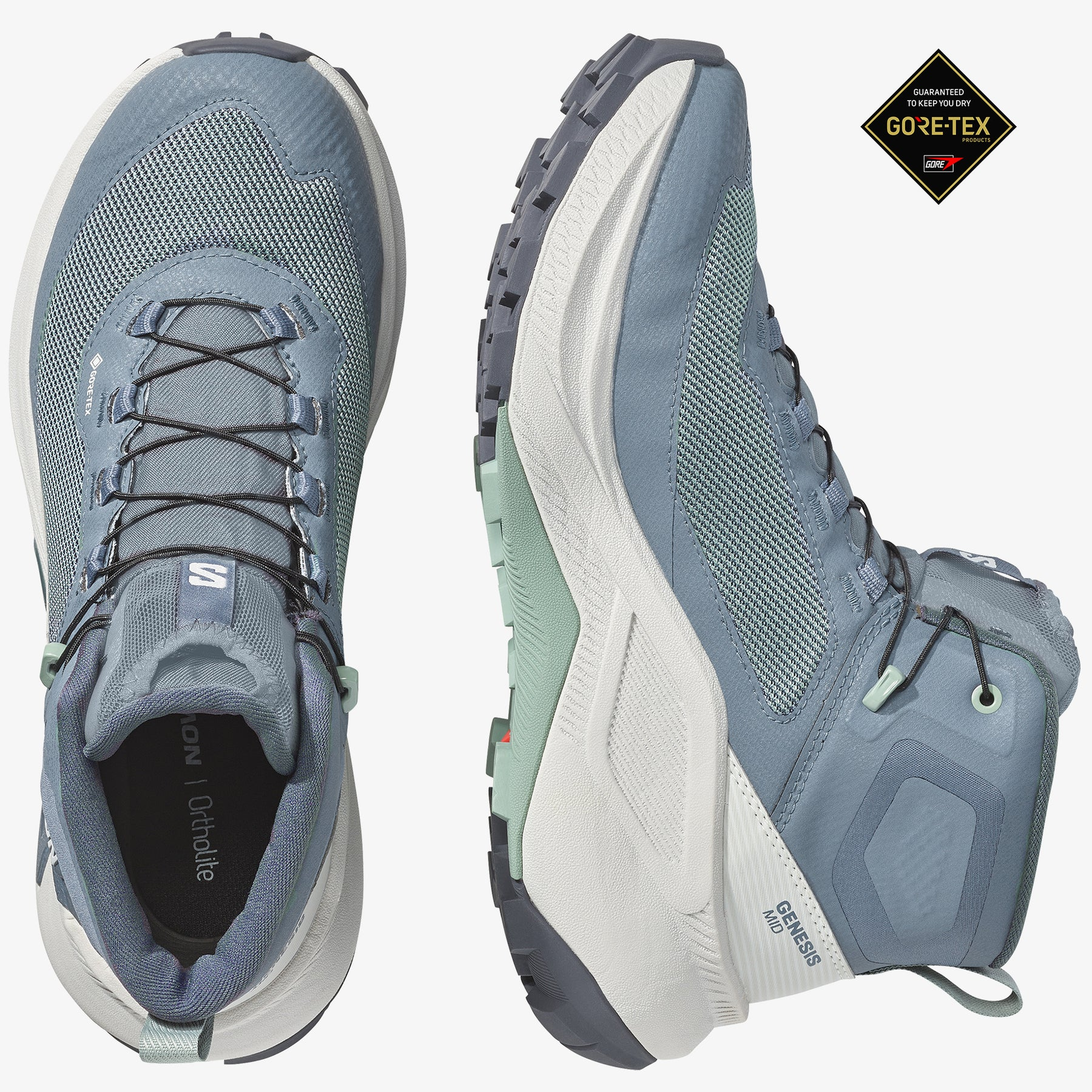
Salomon Genesis MID Gore-Tex
The hiking boot that doesn’t hike like a hiking boot.
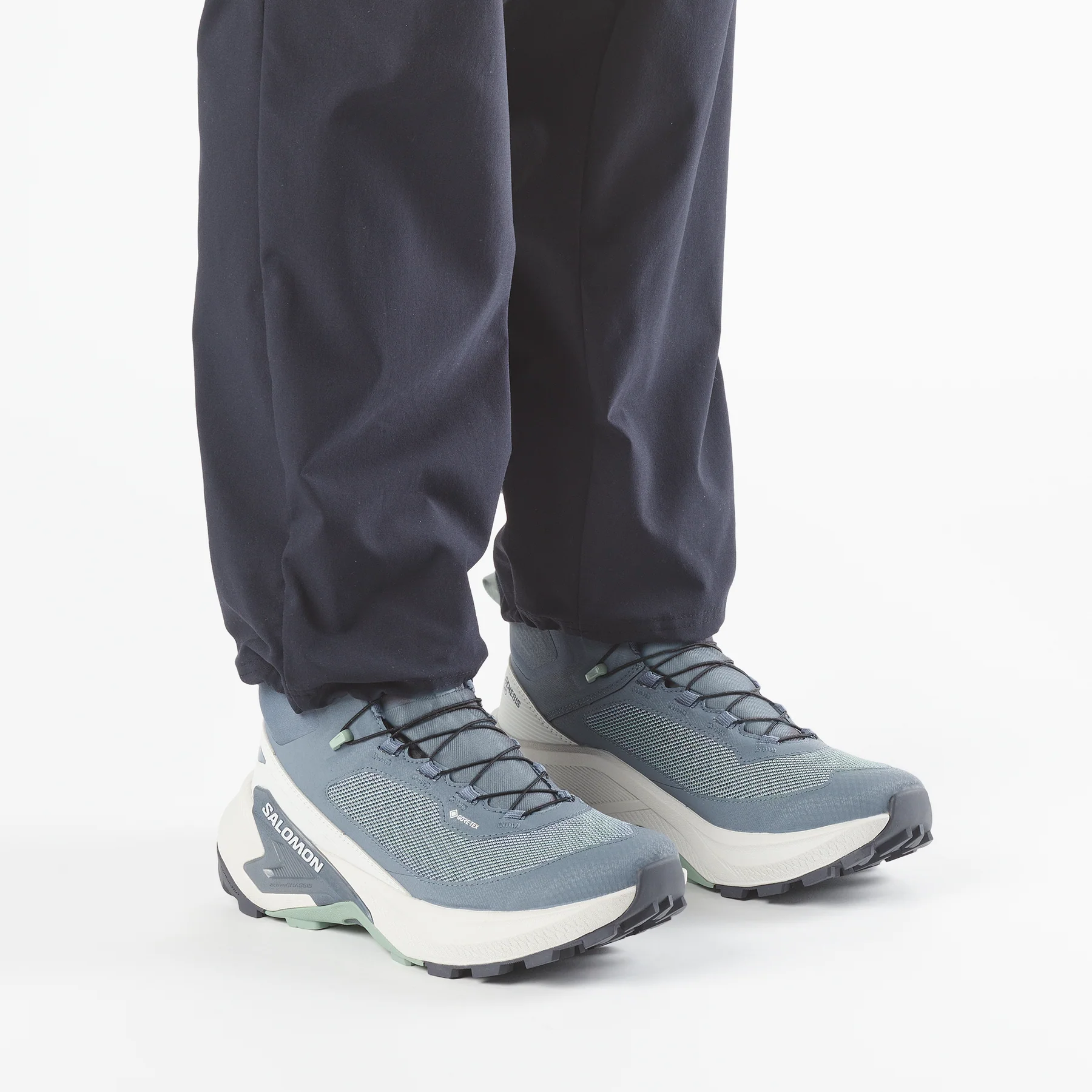
This is the one that has genuinely caught our attention. The Genesis MID Gore-Tex is a brand-new mid-cut hiking boot built on a trail running platform, and it solves a problem that anyone who’s ever suffered through a heavy, stiff traditional hiking boot will immediately recognise: why does a hiking boot have to feel like a hiking boot?
The Genesis MID weighs in at approximately 346 grams per shoe. To put that into context, that is the kind of weight you’d expect from a trail running shoe or a lightweight walking shoe – not a waterproof, mid-cut, ankle-supporting hiking boot. It is a remarkable achievement in footwear engineering, and it’s the single most compelling reason to pay attention to this shoe.
Underfoot, you get Salomon’s optiFOAM midsole for cushioning and energy return, with an activeCHASSIS stability platform that keeps you grounded on technical terrain. The outsole is All-Terrain Contagrip, designed to perform on wet rock, loose gravel, mud, and everything in between. An integrated Gore-Tex membrane handles the waterproofing, and the mid-cut construction gives you real ankle support without the penalty of traditional boot weight.
Full specifications:
Weight: 346 g per shoe (385 g in men’s sizes)
Heel-to-Toe Drop: 8 mm
Stack Height: 39 mm heel / 31 mm forefoot
Midsole: optiFOAM (EVA-based cushioning with energy return)
Stability: activeCHASSIS technology
Outsole: All-Terrain Contagrip (multi-directional lugs)
Waterproofing: Gore-Tex membrane
Lacing: Salomon QuickLace system
Terrain: Wet terrain, rocky and technical paths, mud, mixed trails
Price: R4 499 at salomonsports.co.za
We are currently putting the Genesis MID Gore-Tex through its paces on local trails, and a full review will follow in a month’s time. But we’ll say this much now: our initial reaction is that it is genuinely impressive. The weight-to-protection ratio is unlike anything we’ve tested in a hiking boot category before. If you’ve ever wished your hiking boots felt more like your trail runners – while still delivering proper waterproofing and ankle support – this boot deserves your attention.
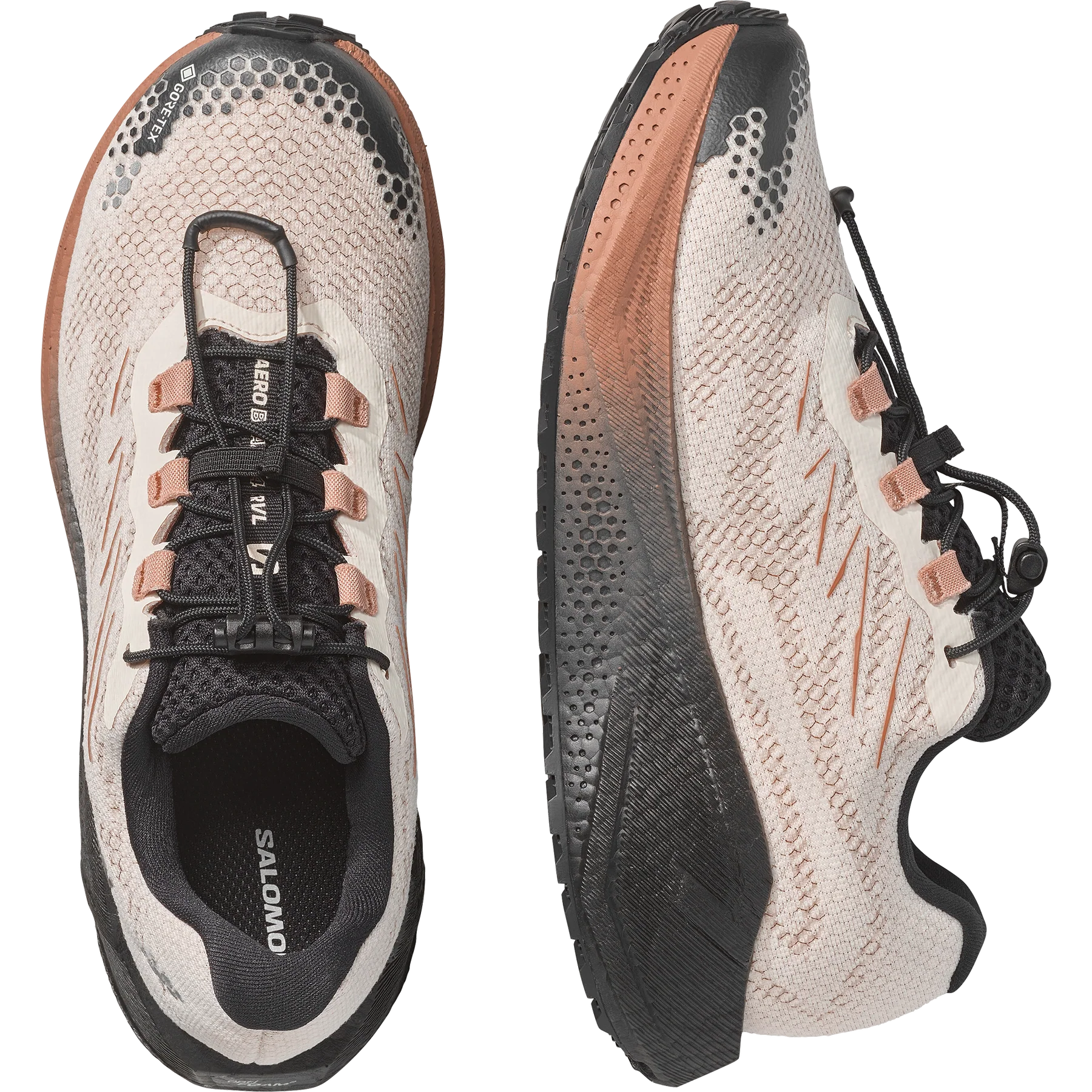
Salomon Aero Blaze 3 GRVL Gore-Tex
When your run starts on the pavement and ends on a gravel path.
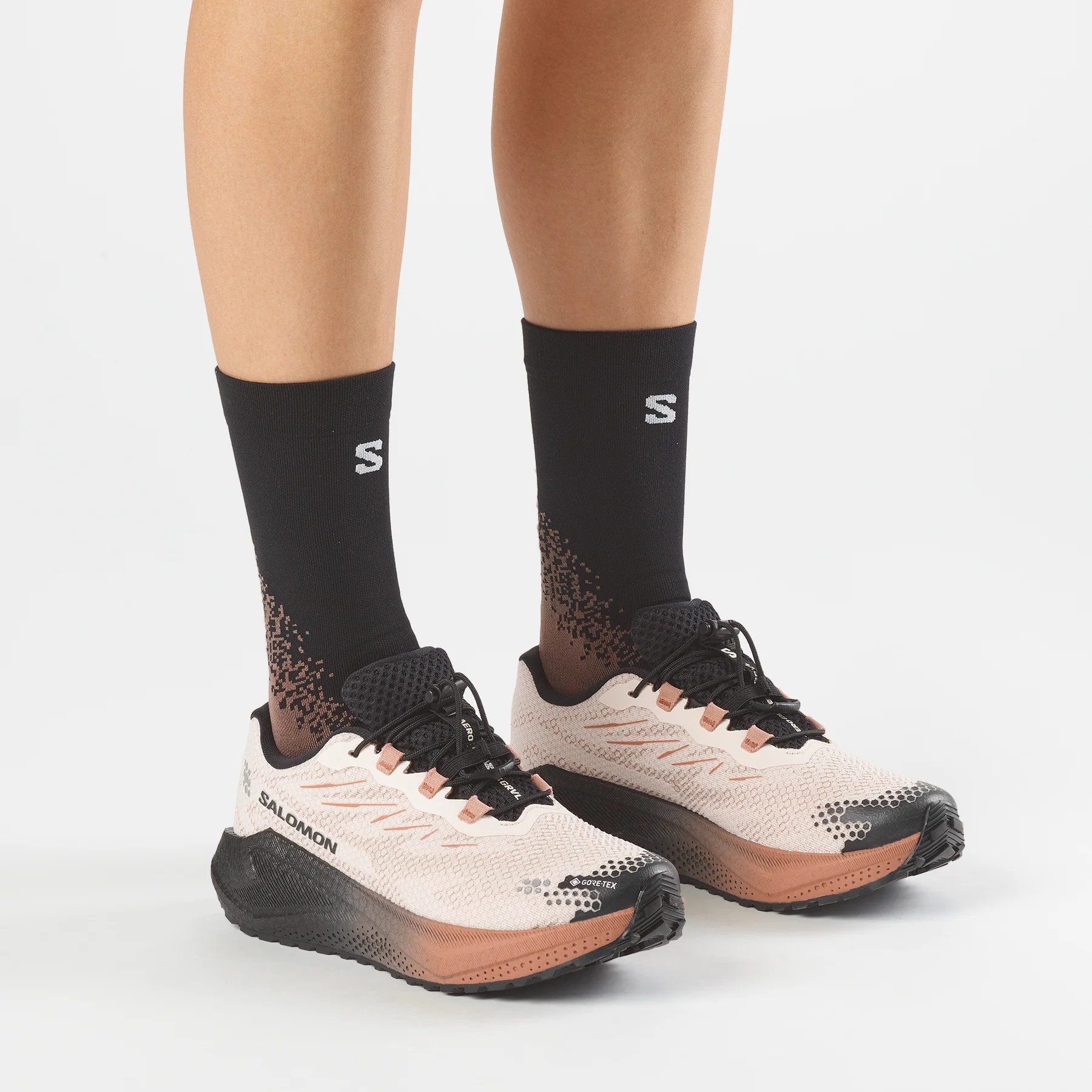
The Aero Blaze 3 GRVL Gore-Tex plays a different game entirely. This is not a hiking boot – it’s a gravel running shoe, a category that has exploded in popularity as runners increasingly find themselves transitioning between tarmac, gravel roads, and light trail in a single outing. If you’re running out of your front gate, hitting suburban roads, then cutting onto farm tracks or forestry paths – this is the shoe designed for that exact scenario.
What makes the Gore-Tex version particularly compelling here is that gravel running tends to involve shorter, more intense efforts than long-distance trail running. That fundamentally changes the breathability calculus: the membrane has a much easier job managing internal moisture over a 60-minute effort than it does over a six-hour mountain hike. Meanwhile, the waterproofing benefit – especially on cold, wet winter mornings – is immediate and real.
The shoe features Salomon’s optiFOAM² midsole, which delivers soft landings and an energetic rebound. The Gravel ContaGRIP outsole uses a bike-inspired tread pattern that transitions seamlessly between tarmac and gravel surfaces, while chevron lugs provide grip on softer terrain. Internal sensiFIT construction wraps the foot securely, preventing slippage during faster efforts. The Gore-Tex membrane used here is the newer PFC-free version: lighter environmental footprint, same waterproof performance.
Full Specifications:
Weight: 239 g (280 g in men’s sizes)
Heel-to-Toe Drop: 8 mm
Stack Height: 35 mm heel / 27 mm forefoot
Lug Depth: 2.5 mm
Midsole: optiFOAM² (100% TPU, energy absorption and return)
Outsole: Gravel ContaGRIP® with chevron lugs
Waterproofing: Gore-Tex PFC-free membrane (ePE-based)
Insole: Moulded OrthoLite® sockliner
Fit System: Internal sensiFIT™
Best For: Everyday runs, road-to-gravel transitions, 2-3 runs per week
Price: R3 999 at salomonsports.co.za
ALL THAT says
Gore-Tex is not back because it never left – it’s back because we’ve all got a better understanding of when and where to use it. The Gore-Tex sceptics were right about ultra distances and extreme heat. But for South African hikers tackling winter mountains and gravel runners navigating wet morning roads, the technology is as relevant as it has ever been.
Salomon has been smart about where they’ve applied it. The Genesis MID delivers it in a hiking boot that finally respects your feet’s need for freedom of movement. The Aero Blaze 3 GRVL delivers it in a hybrid running shoe that refuses to let a wet forecast cancel your run.
Both are available now at Salomon Sports South Africa. Keep an eye out for our full Genesis MID Gore-Tex review.
This article is not sponsored by contains affiliate links. If you purchase through our links, we may earn a small commission at no extra cost to you. All opinions are those of the editorial team.
Also read

Johannesburg’s air pollution problem does not stop at the front door
New vehicle emissions research and renewed scrutiny of Highveld pollution are putting the air Johannesburg residents breathe back in focus, including what happens once they go indoors.
Nike’s Swooshfly promises carbon-plate benefits for slower runners. Here’s what the science really says
Gerda Engelbrecht At the latest Nike launch event, the Apex and Alphafly 4 may have been the headline act, but it’s the new Swooshfly that’s stole...
The 37.5 fabric is a game-changer for more than just athletes
Gerda Engelbrecht Whether you’re pushing through a HIIT session, tackling weekend trails, or managing the unpredictable temperature swings of menopa...