


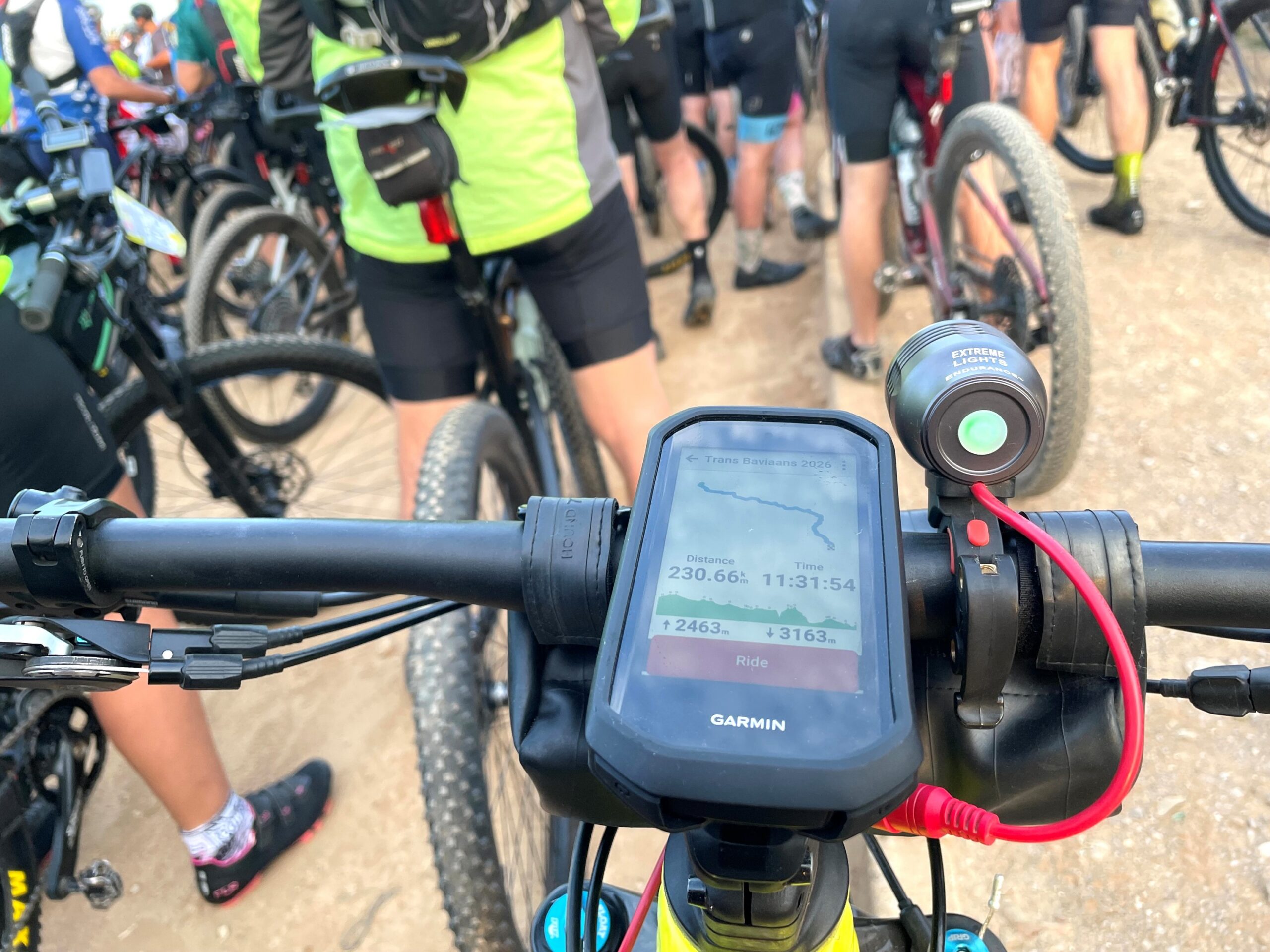
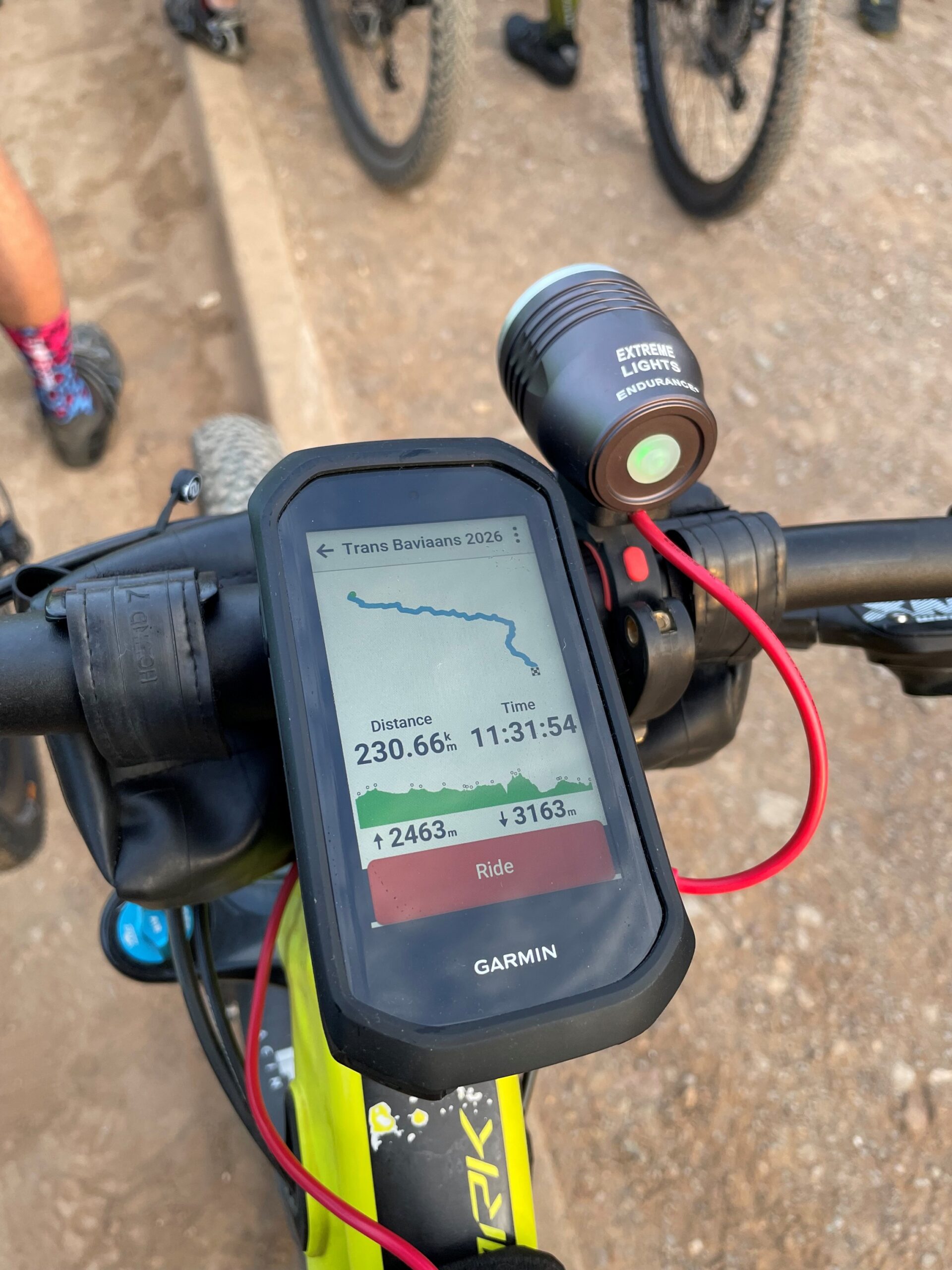
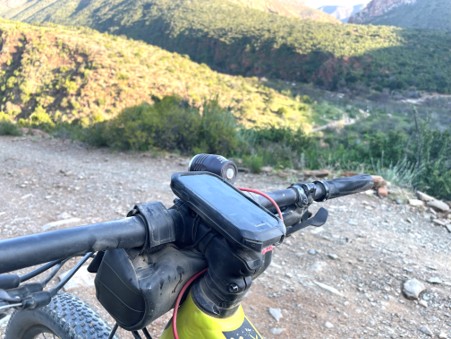
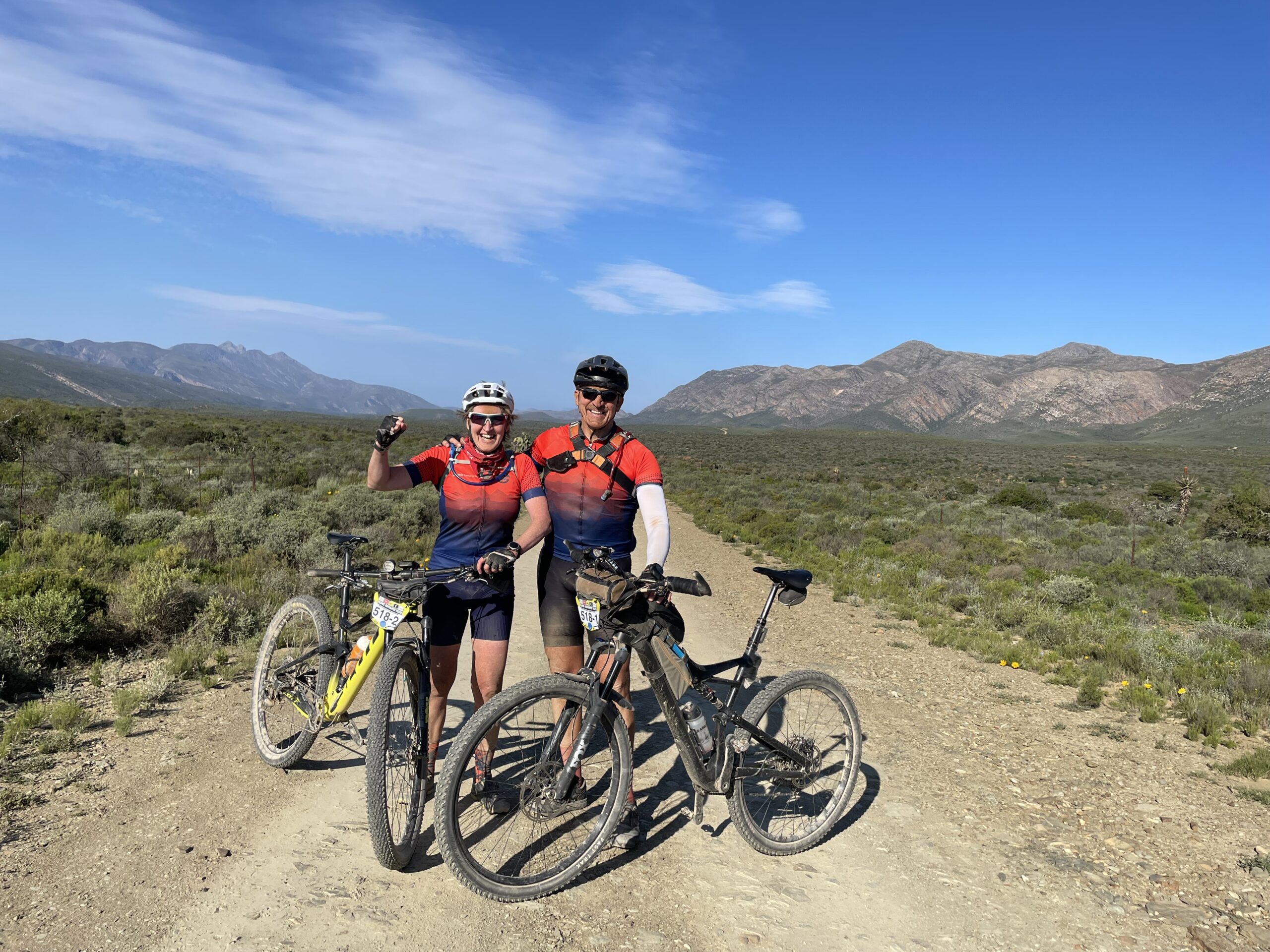
I tested the Garmin Edge 1050 over 230 km (and 17 and a half hours) and this is why I love it…
How the Garmin Edge 1050 (a.k.a. ‘Aunty G’) got us through our fifth TransBaviaans
Karin Burger
There’s a reason the TransBaviaans is regarded as the toughest single-stage mountain bike race in the country – some might even say in the world. The gruelling route covers 230 km from Willowmore through the Baviaanskloof to Jeffreys Bay, all within 24 hours – not for the faint-hearted.
I was excited to take part in my fifth TransBaviaans in 2026 and collect my special five-times shield. But Mother Nature threw us riders a curveball. With the Baviaanskloof Nature Reserve closed due to flood damage, the 2011 route was revisited for only the second time in the race’s 22-edition history. The 2026 TransBaviaans followed the alternative Langs Baviaans course, along the north-eastern slopes of the Baviaanskloof Mountains. Still measuring 230 kilometres, it was widely declared far more difficult by the 2026 finishers.
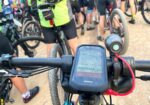
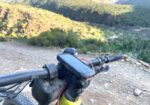
The race organisers made it clear that all participants would need a bike computer capable of reading a GPX file to get to the finish line. I’m familiar with Garmin watches – I’ve always used them to measure distance, speed, heart rate, and so on – but for this race I opted for the Garmin Edge 1050 bike computer to guide my teammate and me over the rough and unfamiliar route. We wanted to give the device a name, seeing as it would be such an important member of our team. We started off calling it Aunty Garmin, then it just became Aunty G. I know – not a sexy name for such a sexy bike computer, but there’s a lot of respect and trust in the Aunty name.
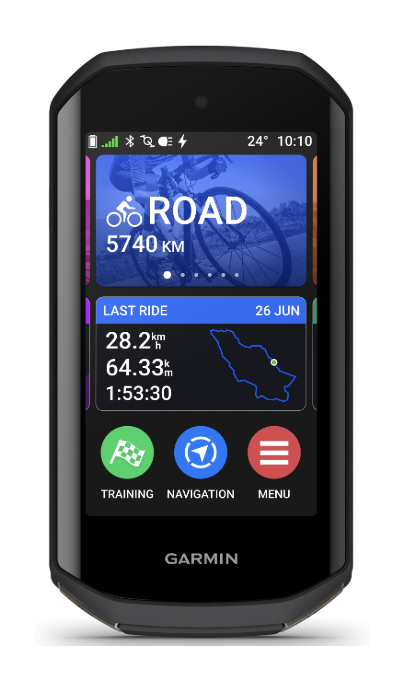
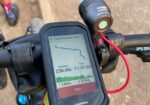
Come race day, I’d downloaded the route and familiarised myself with the device’s navigation. I really like the size of the screen – easy enough to read for somebody who’s used to reading glasses. Kudos for the sharpness, clarity, and readability in all lighting. Even in the harsh midday sun, the crisp screen was easy to read. Through the first 140 km we encountered a lot of dust, and with a quick wipe of a buff, the touch screen was clean again.
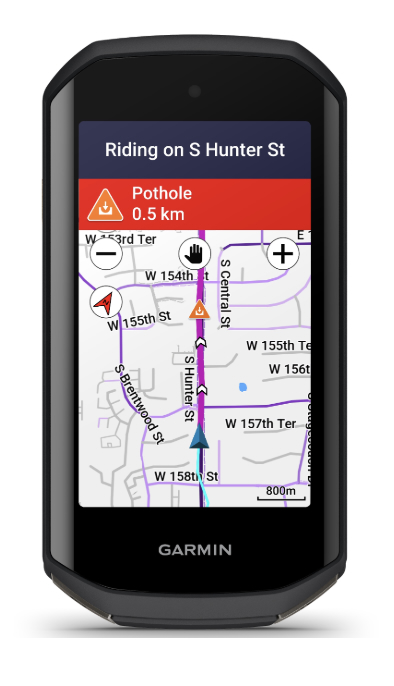
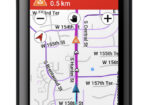
Back to the navigation, and why I picked this device. The accuracy and ease of use are commendable. On-screen prompts appear during the ride, with full-screen views for upcoming turns that overlay the map. Auto Zoom automatically adjusts the map zoom level as you approach turns, or you can disable it for full manual control.
Halfway into the race, the terrain got really rough, and for safety reasons you had to keep your eyes on the route and your hands on the handlebars. This is where the audible spoken instructions really came in handy. You can choose a male or female voice, and there are multiple languages and dialects available. My teammate opted for the female voice. He said he’s been married for many years and is used to taking orders from a female voice – and the female voice fitted the nickname of Aunty G perfectly. I turned up the volume, and the built-in speaker is good enough to clearly hear the turn-by-turn directions: when to turn, which direction, and approaching destination alerts. (If you’d rather not have a voice, you can choose simple beep tones instead.)
Help on the Neverender
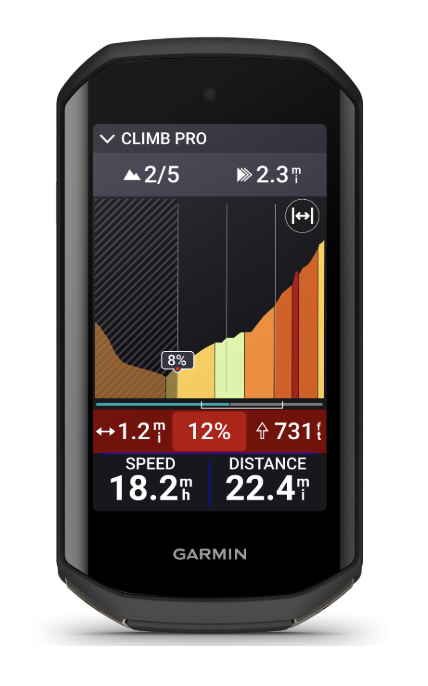
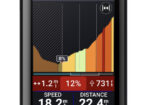
Since I didn’t have much time to really explore the Garmin Edge 1050 before the race, the ClimbPro feature was a real eye-opener in more than one sense. The real-time ascent planner helps you pace efforts on climbs. This was especially useful on the 17 brutal kilometres of climbing on the Father of All Climbs, followed shortly by the Neverender. The ClimbPro screen appears automatically when you start climbing. It shows the remaining distance of the current climb, the remaining ascent (vertical metres still to climb), the current grade (gradient percentage in real time), a visual profile of the climb showing where you are on it, and configurable data fields – typically grade and elevation. It also showed upcoming climbs, so you can mentally and physically prepare, knowing the length, gradient, and total ascent of the next segment before you hit it.
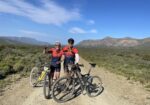
After 17 hours and 28 minutes, my teammate, Aunty G, and I crossed the finish line at Mentors Country Estate in Jeffreys Bay. The battery was sitting at 55% – very impressive, considering we’d been riding in Dark Mode (night mode with a brighter screen) for almost eight hours.
Crossing that finish line never gets old. There’s the exhaustion, the relief, the quiet satisfaction of knowing you’ve pushed through something most people wouldn’t even attempt. And this time, there was the five-times shield – a piece of metal and wood that carries a lot of meaning. Five editions. Five finishes. Every single one was earned the hard way.
Thanks, Aunty G
What struck me, standing there in the aftermath, was how much of this finish I owed to Aunty G. On a route none of us had ridden before, with conditions that could have gone sideways at any point, that little device on my handlebars was the one constant. It told us where to go, how far we had left, how much climbing was still ahead, and when to ease off or push on. It never once let us down. In a race where the difference between finishing and not finishing can come down to a single wrong turn, that’s worth everything.
I needed a bike computer to get me from start to finish, but with the Garmin Edge 1050 I got so much more. I’m still discovering new features every day – things I didn’t even know I needed but now can’t imagine riding without. I’m sure if I look hard enough, I’ll find the coffee button here somewhere.
So, is the Edge 1050 worth the money? If you’re riding around the block on a Sunday morning, maybe not. But if you’re lining up for something like the TransBaviaans – or any ride where getting it wrong isn’t an option – then absolutely, every cent. Aunty G earned her place on the team, and she’ll be there for number six. Beyond racing, the Edge 1050 is just as at home on a bikepacking trip — an increasingly popular way to holiday — where reliable navigation, long battery life, and turn-by-turn directions are just as essential on a multi-day adventure as they are in a 230-kilometre race.
Garmin Edge 1050 – At a glance
| Spec | Detail |
| Display | 3.5-inch transmissive LCD touchscreen, 1,000 nits |
| Resolution | 480 x 800 pixels |
| Dimensions | 60.2 x 118.5 x 16.3 mm |
| Weight | 161 g |
| Battery Life | Up to 20 hours (demanding use), up to 60 hours (battery saver) |
| Battery Capacity | 3,000 mAh lithium-ion |
| Internal Storage | 64 GB |
| GPS | Multi-band GNSS (GPS, GLONASS, Galileo) |
| Connectivity | ANT+, Bluetooth, Wi-Fi |
| Water Rating | IPX7 |
| Charging | USB-C |
| Price | R16 499 |
This article was not sponsored and contains no affiliate links. All opinions expressed are those of the editorial team.
Also read
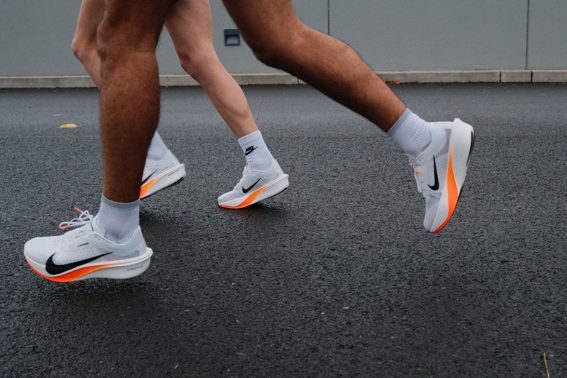
Nike’s Swooshfly promises carbon-plate benefits for slower runners. Here’s what the science really says
Gerda Engelbrecht At the latest Nike launch event, the Apex and Alphafly 4 may have been the headline act, but it’s the new Swooshfly that’s stole...

Apple’s double launch: Should you upgrade to the iPhone 18 Pro now, or wait for the Duo?
Gerda Engelbrecht Apple has shaken up its traditional September release schedule, delivering not one but two distinct flagship experiences: the photog...

The art of decanting: The smart way to serve wine at its best
Gerda Engelbrecht We tested a temperature-controlled decanter from Solenco and it solved one of wine service’s most annoying problems. If you’ve e...