



The 20-Minute Window: Why your wine only tastes perfect for a few moments
Wilmer Muller
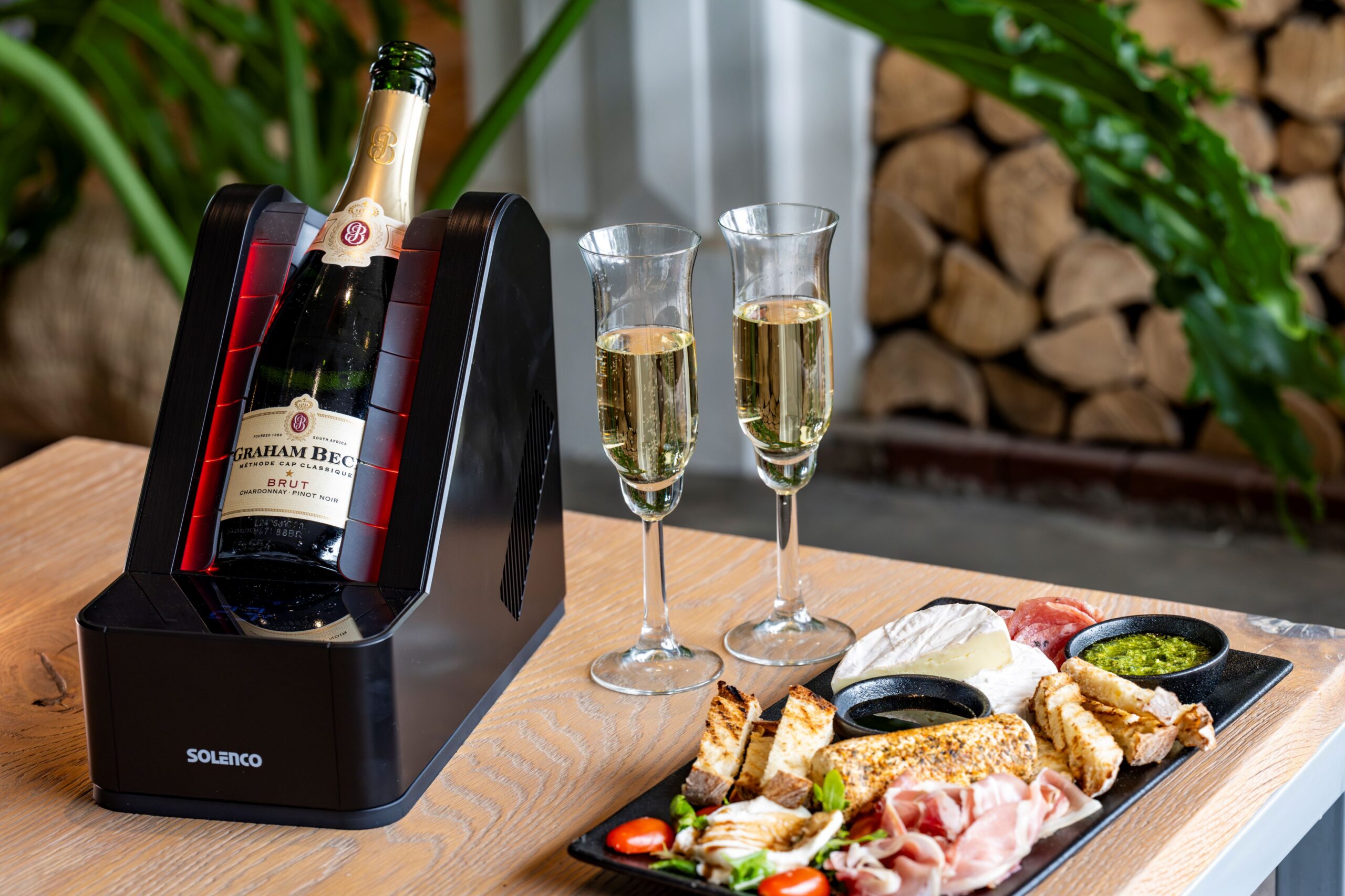
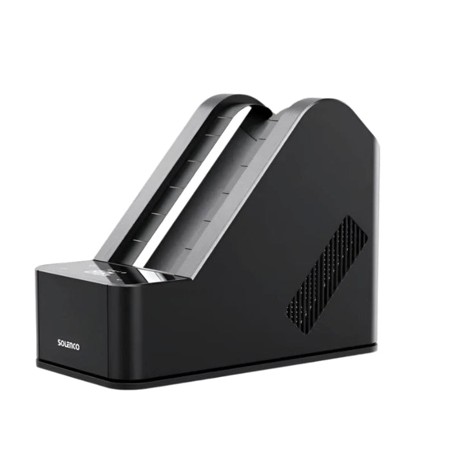
TESTED: If you regularly treat yourself to expensive wine, you should also treat yourself to a gadget to serve it properly. We tested the Solenco Life Precision Bottle Wine Cooler and were impressed.
You’ve just opened a perfectly chilled Sauvignon Blanc. That first pour is magnificent – crisp, vibrant, with those classic gooseberry and tropical notes singing on your palate. An hour later something has changed. The wine tastes flabby, the acidity seems muted, and there’s an unwelcome alcoholic warmth that wasn’t there before.
What happened? Your wine got too warm. And in South Africa’s climate, it happened faster than you think.
The silent saboteur of good wine
Here’s the problem most wine drinkers don’t notice: whilst the bottle warms relatively slowly – taking around two hours to move from refrigerator temperature to room temperature – the wine in your glass warms significantly faster.
We tested this recently on a surprisingly hot winter’s day in Cape Town. Wine poured at 8°C into a standard glass showed measurable warming within the first 10 minutes. Recent computational fluid dynamics studies confirm this: wine in a glass warms through a combination of conduction from the glass itself, convection as warmer wine rises and cooler wine sinks, and even radiation from the surrounding environment.
The real issue emerges during dinner parties. You pour the first round from a perfectly chilled bottle – those glasses are spot-on. But the bottle sits on the table whilst you eat your starter, chat with guests, and refill water glasses. By the time you pour the second round 20-30 minutes later, the wine emerging from that bottle has begun its journey towards room temperature.
A bottle that started at 8°C and sits on a 23°C dining table for an hour can easily reach 12-14°C – and that’s before you factor in South Africa’s warmer climate or outdoor entertaining on a deck.
The experience changes glass by glass. Your first pour is crisp and vibrant. Your second is noticeably softer. A few sips later, you’re wondering if you opened a different bottle entirely.
Why temperature matters more than you think
Wine is not a static liquid. It’s a complex mixture of water, alcohol, acids, tannins, and aromatic compounds – each responding differently to temperature changes.
When white wines warm up beyond their ideal serving temperature, several things happen simultaneously. The alcohol becomes more prominent on the palate, creating that unpleasant “hot” sensation. The acidity – that backbone of crispness and freshness – appears to soften and fade. Aromatic compounds that give wine its character become muddled and less distinct. What was once bright and focused becomes blurred and flabby.
For reds, serving them too warm (the “room temperature” myth was coined in European cellars, not South African homes) makes them taste jammy, over-alcoholic and soupy. The tannins lose their structure, and the wine’s elegance disappears.
The right temperature for the right wine
Different wines have different sweet spots. Here’s what we found works best for popular South African varietals:
- Sparkling wines and MCC: 5-7°C
- Sauvignon Blanc: 7-10°C
- Chenin Blanc (unoaked): 8-10°C
- Chenin Blanc (wooded): 10-12°C
- Chardonnay: 10-13°C
- Rosé: 9-12°C
- Pinot Noir: 13-15°C
- Pinotage: 15-17°C
- Shiraz and Cabernet Sauvignon: 16-18°C
These aren’t arbitrary numbers. They’re the temperatures at which each wine’s flavour profile is most balanced – where acidity, tannins, fruit character and alcohol all harmonise properly.
Testing the Solenco Life Precision Bottle Wine Cooler
This is where the Solenco Life Precision Bottle Wine Cooler enters the equation. We tested it over three weeks with various wine types to see if it could solve the temperature creep problem.
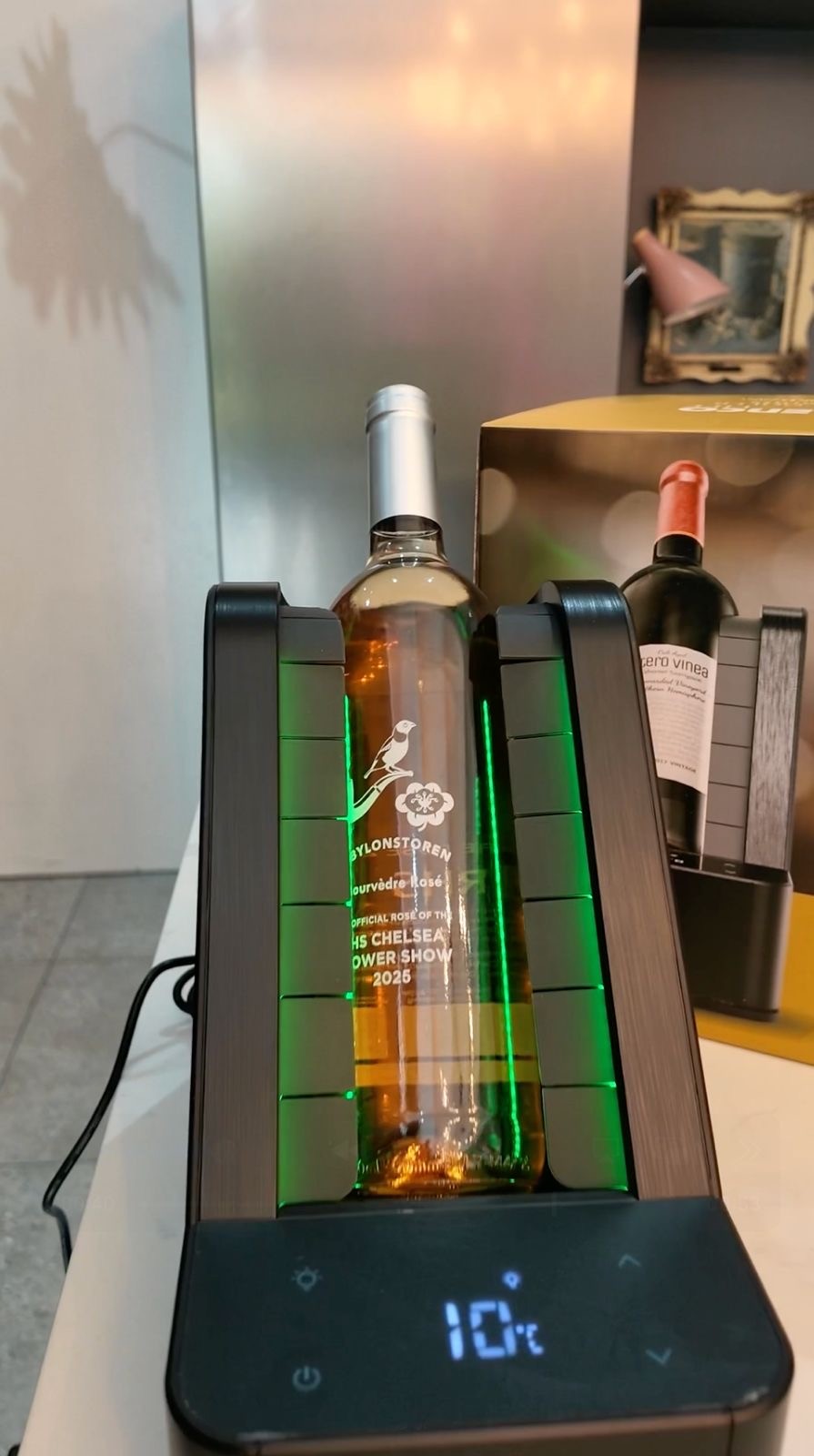
The concept is straightforward: you pre-chill your wine in the refrigerator to your desired temperature, then place the bottle into the cooler’s chamber. Using thermoelectric cooling technology, the device maintains that exact temperature (anywhere from 5°C to 20°C) for as long as the bottle remains in the chamber.
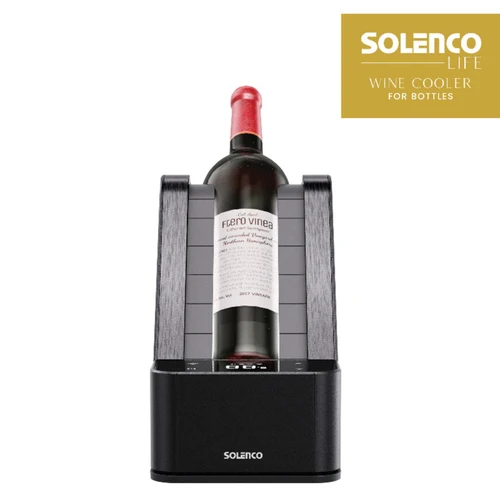
The specifications are modest but effective: 60W power consumption, digital touch controls, and compatibility with standard cylindrical bottles up to 96mm in diameter. The compact footprint (150 × 295 × 227mm) means it doesn’t dominate your table.
During our testing, we were impressed by the accuracy. A Sauvignon Blanc chilled to 9°C and placed in the cooler set to 9°C remained at 9°C for over two hours. We monitored this with a wine thermometer, checking every 15 minutes during a dinner party. By the time we poured the final glass – 90 minutes after opening the bottle – the temperature had drifted by less than one degree.
Compare that to our control bottle, left on the table in a traditional ice bucket. Despite regular ice top-ups, the temperature fluctuated between 7°C (too cold, muting the aromatics) and 11°C (when the ice melted faster than we could replace it). The dripping condensation left watermarks on our table, and wrestling with a wet, slippery bottle mid-dinner was decidedly inelegant.
The elegance factor
There’s something to be said for aesthetics at the dinner table. The Solenco cooler, with its ambient LED lighting and clean lines, looks intentional and considered. It’s a conversation piece that signals you care about wine service. An ice bucket, no matter how expensive, is still a bucket of melting ice with a soggy label floating in it.
This isn’t trivial. When you’ve spent time planning a menu, setting a table properly, and selecting the right wines, why undermine it with puddles of water and a bottle you need to dry off every time you pour?
The one essential requirement
It’s worth emphasising: this device maintains temperature; it does not chill wine from room temperature. You must pre-chill your wine in a refrigerator first. If you place a 20°C bottle into the cooler set to 10°C, you’ll be waiting hours for it to drop, and the device isn’t designed for that kind of heavy cooling load.
Think of it as a holding pattern, not a refrigerator. Chill your wine properly beforehand, then let the Solenco cooler do what it does best: keep it there.
Who this is for (and who it isn’t)
Let’s be direct: the Solenco Life Precision Bottle Wine Cooler – like the expensive wines it’s designed to serve – is not for everyone.
If you’re content drinking your plonk however it comes, or if your bottles rarely last long enough for temperature to become an issue, you don’t need this. An ice bucket from the kitchen will suffice.
But if you’re someone who invests in quality wine – if you’re spending R200, R300, R500 or more on bottles you’ve carefully selected – then serving that wine at the wrong temperature is leaving money on the table. It’s the equivalent of buying premium coffee beans and brewing them in a dirty cafetière with boiling water.
The cooler isn’t about luxury for luxury’s sake. It’s about getting what you paid for. It’s about that R400 bottle of Chenin Blanc tasting like R400, not like the R150 alternative because you served it at 16°C instead of 11°C.
Wine is one of the few products where serving temperature can fundamentally alter what you’ve purchased. A dessert doesn’t change if it sits on your plate for 20 minutes. Wine does. If you’re willing to spend decent money on decent wine, it’s worth considering whether you’re also willing to invest in serving it properly.
Because the difference between the first glass and the second shouldn’t be six degrees and a sense of disappointment.
Buy it HERE from takealot.com
This article was not sponsored but contains affiliate links. If you make a purchase through these links, ALL THAT will receive a small commission at no extra cost to you. All opinions expressed are those of the editorial team.
Also read
Nike’s Swooshfly promises carbon-plate benefits for slower runners. Here’s what the science really says
Gerda Engelbrecht At the latest Nike launch event, the Apex and Alphafly 4 may have been the headline act, but it’s the new Swooshfly that’s stole...

Apple’s double launch: Should you upgrade to the iPhone 18 Pro now, or wait for the Duo?
Gerda Engelbrecht Apple has shaken up its traditional September release schedule, delivering not one but two distinct flagship experiences: the photog...
The art of decanting: The smart way to serve wine at its best
Gerda Engelbrecht We tested a temperature-controlled decanter from Solenco and it solved one of wine service’s most annoying problems. If you’ve e...