





Why I was wrong about the DJI Neo 2
It still uses a 1/2-inch sensor, but a massive hardware rethink turns DJI’s latest pocket drone from a lightweight toy into a genuinely useful B-cam.
I’ll be honest: I wasn’t sold on it at first. When the original DJI Neo arrived, it ticked a lot of the right boxes on paper. It was ultra-portable and incredibly light at just 135 grams. But the moment you looked at the actual footage, the illusion broke. That first-generation 1/2-inch sensor produced video that looked undeniably “soft.” While it made for a fun little toy to fly around, the photos and videos simply weren’t good enough to deploy in any kind of semi-professional environment.
So, when I saw the spec sheet for the DJI Neo 2 and realised it was sticking with the same 1/2-inch sensor size, I dismissed it out of hand. Why buy yesterday’s soft optics repackaged? But then I started seeing real, impressive footage coming out of it in the wild. The sharpness, the colour science, and the stability looked like they belonged to a completely different class of drone. I had to reconsider.
As it turns out, DJI didn’t need a larger piece of silicon to fix the image quality – they just needed to fix everything around it.
Why the image quality actually improved
The massive leap forward in video quality comes down to three major hardware upgrades that maximise what that 1/2-inch sensor can do:
The 2-axis mechanical gimbal: The first Neo relied on a 1-axis gimbal (tilt only) and forced Electronic Image Stabilisation (EIS) to digitally warp and crop the image to fix side-to-side roll. The Neo 2 moves to a physical 2-axis gimbal. By mechanically stabilising both tilt and roll, the software has to do far less digital stretching, resulting in a crisp, organic image.
A Brighter f/2.2 Lens: DJI swapped out the old f/2.8 glass for a much wider f/2.2 aperture. This allows significantly more light to hit the sensor, meaning the drone’s processor doesn’t have to aggressively crank up the digital gain (ISO) in low light. The shadows stay clean, and the grain disappears.
Upgraded Processing & 4K/60fps: A faster internal image processor handles noise reduction and colour science with far more sophistication, while doubling the max frame rate from 4K/30fps to a smooth 4K/60fps.
What I really like about it
Form Factor: At just 151 grams (without the optional digital transceiver module), it is still ridiculously small and light. You can toss it in a jacket pocket or the side pocket of a backpack without a second thought.
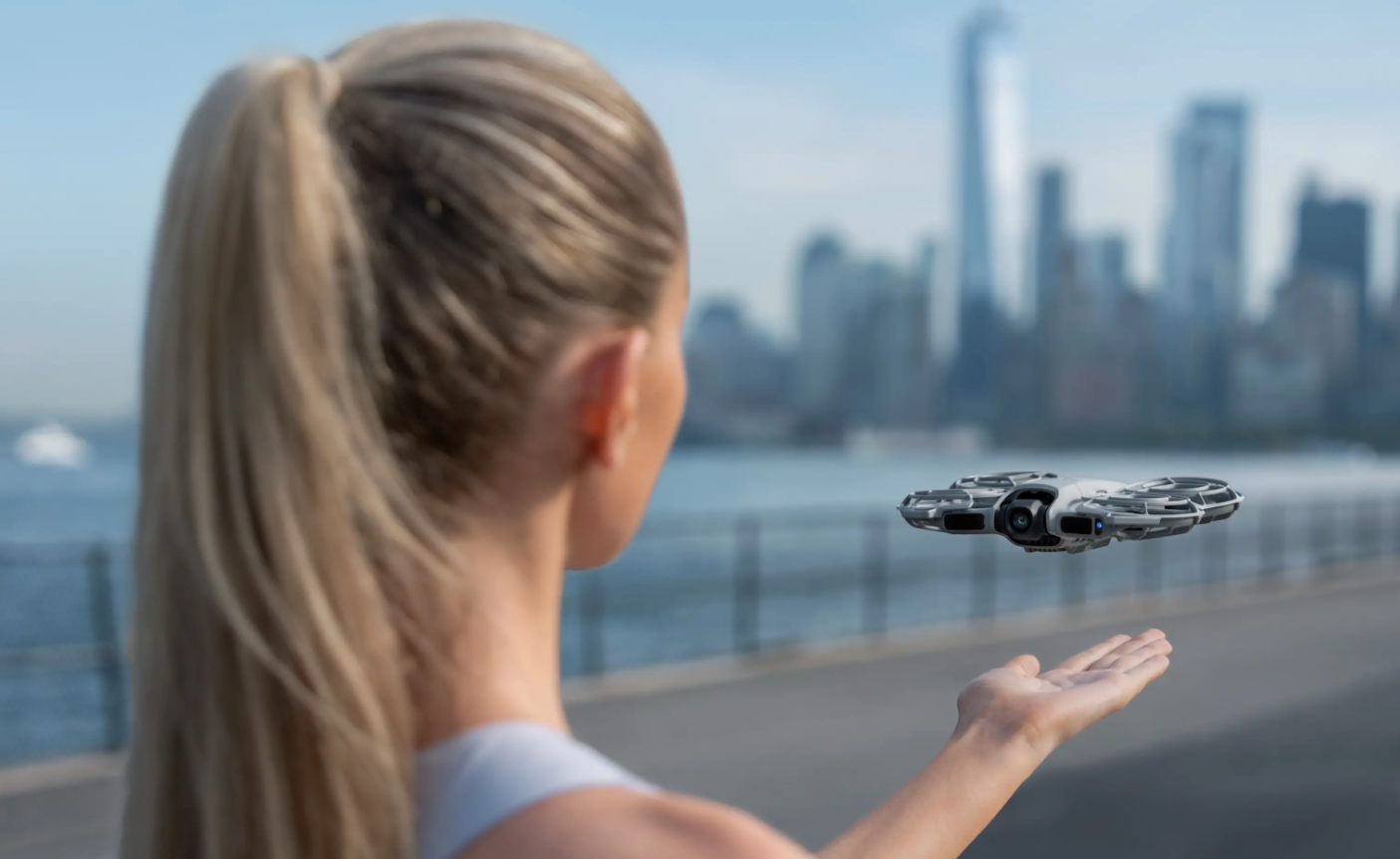
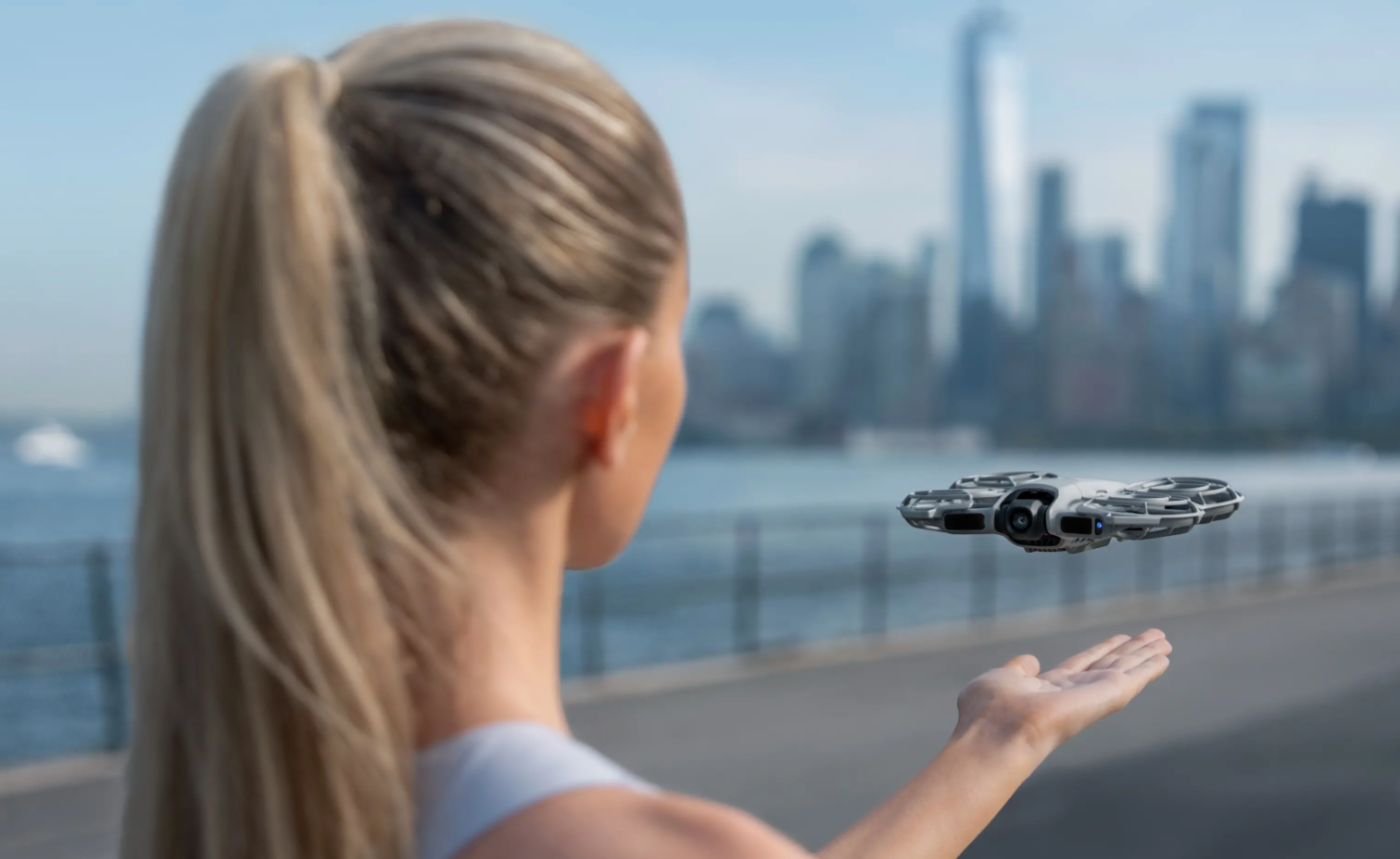
Extreme user-friendliness: The friction to get it into the air is practically zero. You can launch and land it right from your palm and control it entirely via hand gestures or voice commands. If you need more precision, you can instantly and seamlessly steer it with your smartphone or link it up to a traditional DJI controller or FPV goggles.
Virtually uncrashable: DJI upgraded the tracking suite to an omnidirectional vision system paired with a forward-facing LiDAR sensor. It maps its surroundings with extreme accuracy, making it incredibly difficult to accidentally fly into a wall or a tree during automated tracking shots.
Upgraded wind resistance: It has been bumped from Level 4 to Level 5 wind resistance, letting it handle gusts up to 10.7 metres per second.
The Price: It remains highly affordable, offering a massive amount of tech and stabilisation for a fraction of the cost of a flagship drone.
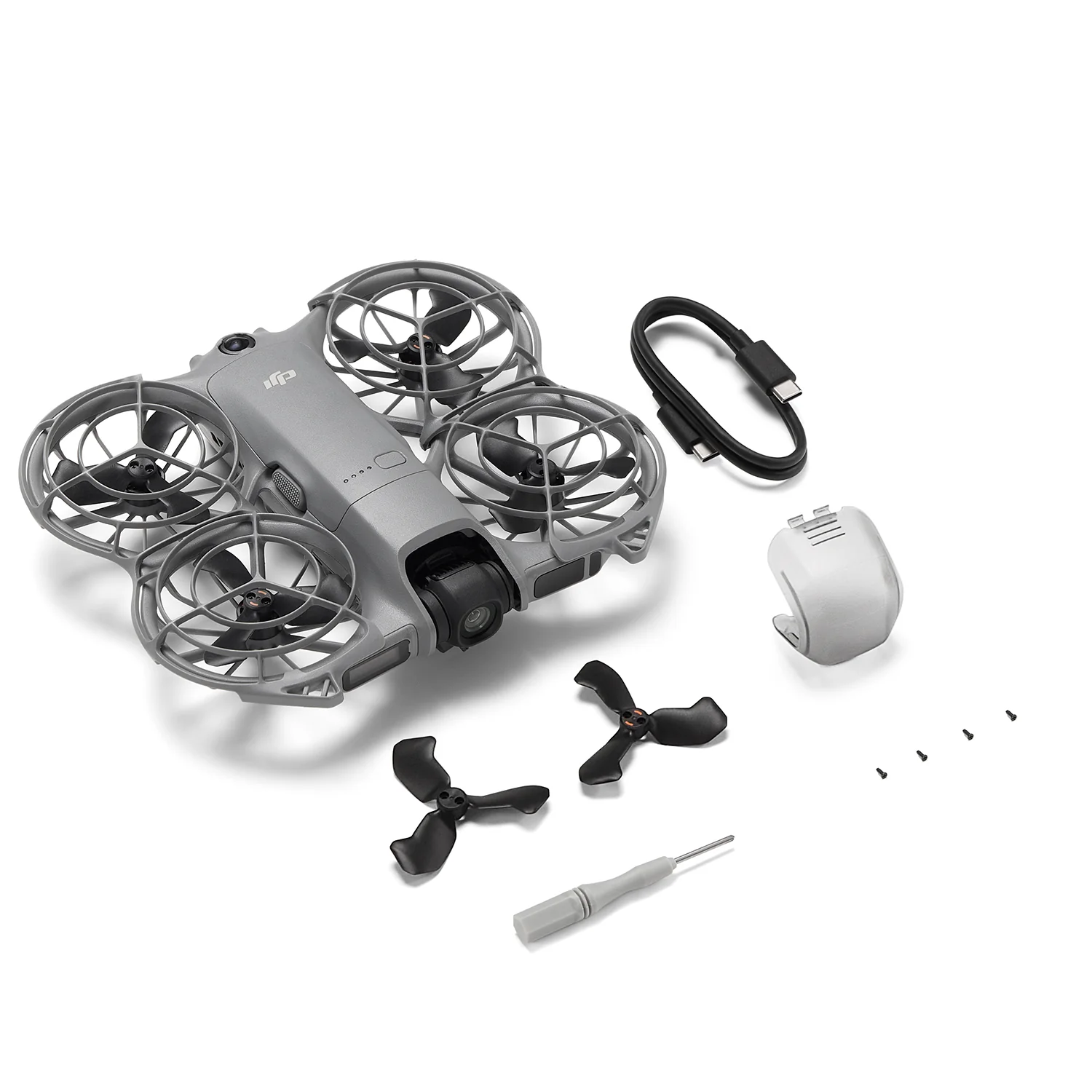
The downside: light and thirsty
Of course, physics always wins in the end. Because it only weighs 151g, it is still very iffy in heavy, unpredictable wind. In all honesty, though, I currently fly the DJI Mini series (which weighs 249 grams) and even the larger DJI Mini series drones get iffy when the wind really starts howling, so it’s hard to judge it too harshly there.
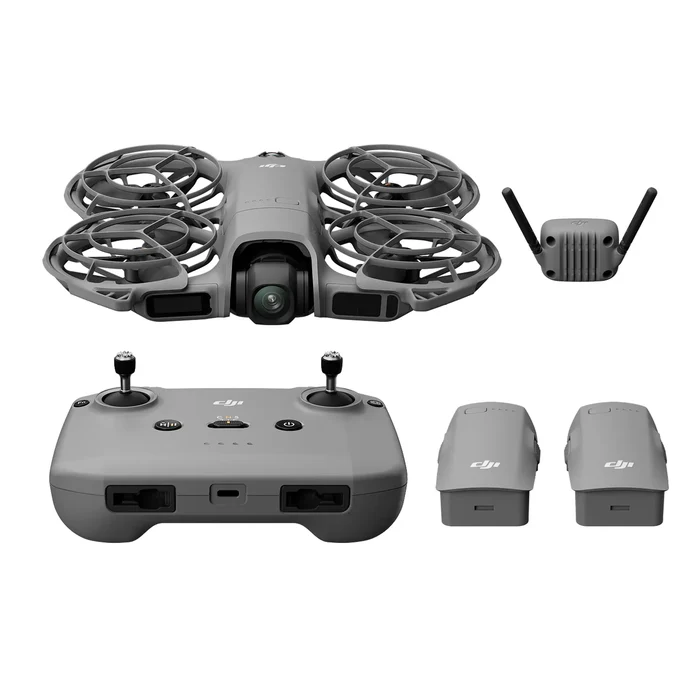
The real-world bottleneck is that the Neo 2 is incredibly thirsty for power. Running the new 4K/60fps processing, the physical 2-axis gimbal, and the power-hungry LiDAR tracking system, it eats through cells quickly. If you plan to use this for a day of shooting, consider the Fly More combo an absolute necessity – you will need some extra batteries in your bag.
This is how they compare side by side
| Feature | DJI Neo | DJI Neo 2 |
| Takeoff weight | 135g | 151g (160g with transciever) |
| Gimbal stabilisation | 1-axis (tilt only) | 2-axis (tilt and roll) |
| Lens aperture | f/2.8 | f/2.2 (Brighter) |
| Max video resolution | 4K at 30fps | 4K at 60fps (100fps slow-mo) |
| Vertical shooting | 1080p | 2.7K at 60fps |
| Wind resistance | Level 4 (8 m/s) | Level 5 (10.7 m/s) |
| Sensors | Downward vision only | Omnidirectional vision + forward LiDAR |
| Internal storage | 22 GB | 49 GB |
ALL THAT says
Let’s keep our expectations realistic. You aren’t going to use this ultra-light rig to shoot a cinematic masterpiece for a TV network or on a film set. But for 90% of drone users—vloggers, content creators, and hobbyists who want high-quality B-roll and automated tracking without the baggage of a massive gear setup – the Neo 2 is an incredibly useful, capable tool that finally punches well above its weight class.
Price
About R4499 for the drone only, and R8399 for the Fly More Combo, which we recommend. Buy it from takealot.com
This article was not sponsored but contains affiliate links. If you make a purchase through these links, ALL THAT will receive a small commission at no extra cost to you. All opinions expressed are those of the editorial team.
Also read

Charging the pitch: Inside the World Cup’s radically redesigned smart ball
The 2022 FIFA World Cup featured battery-powered soccer balls that needed charging on the sidelines.
Messaging from the Bundu: The Garmin InReach Mini 2 vs. The New Mini 3 Plus
In an emergency, getting a message out can be a matter of life and death.

Powerhouse Laptops: Three Game-Changers You Need to Know About
The first half of 2026 has delivered some truly exceptional laptop releases that are redefining what’s possible in portable computing.