


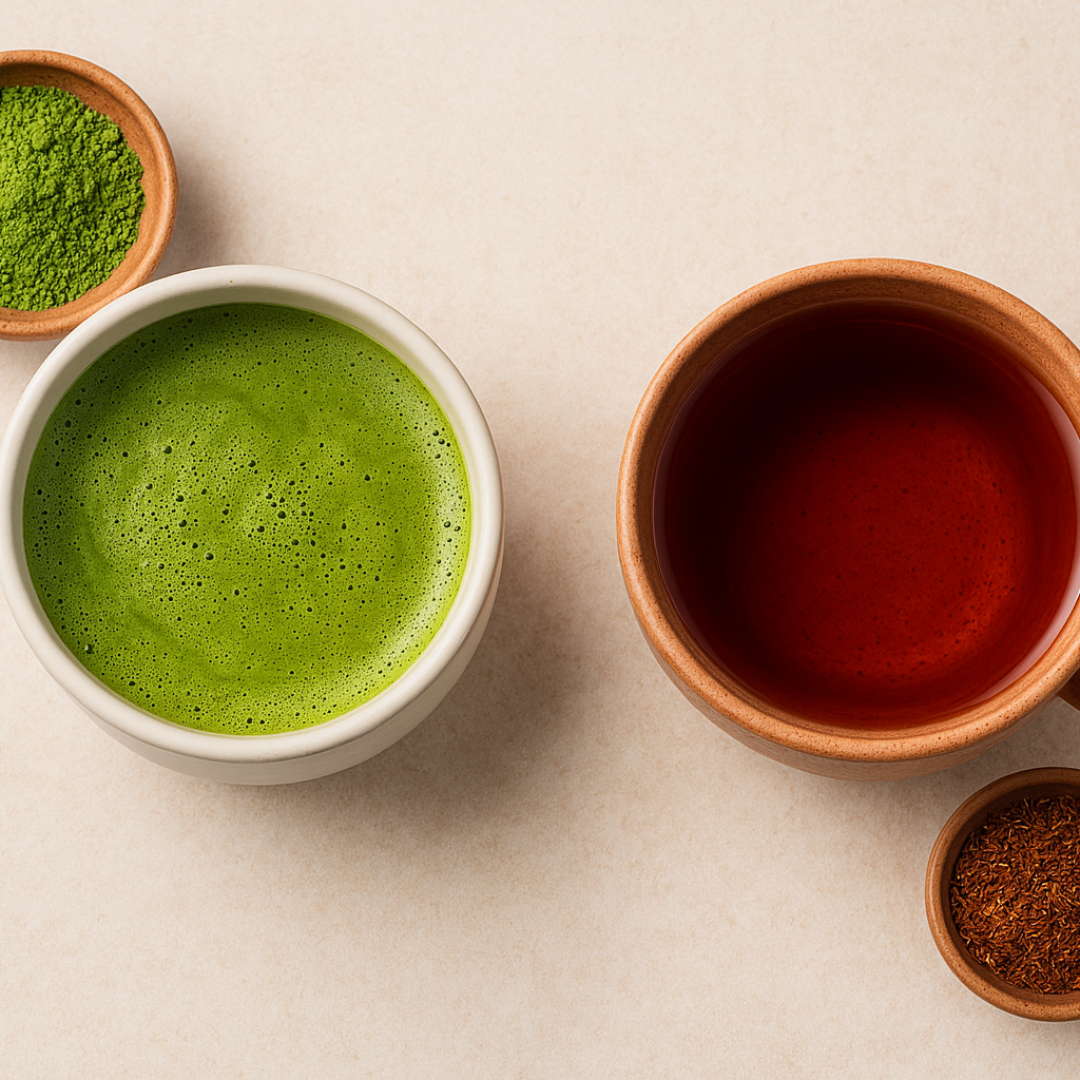
Who will win a match-up between rooibos tea and matcha? It may surprise you
Matcha tea is a major social media trend, but we all know and love (and trust) the health benefits of rooibos. Which one is healthier? Matcha or rooibos? Well, actually, it’s tie .
Matcha (the powerhouse)
Matcha is a powdered green tea, meaning you consume the entire tea leaf, which results in a highly concentrated dose of its nutrients and antioxidants.
Key Health Benefits:
- High in Antioxidants: Matcha is rich in catechins, particularly epigallocatechin gallate (EGCG), which is a powerful antioxidant that helps protect cells from damage and may help in the prevention of chronic diseases. Matcha contains up to 10x more antioxidants than regular green tea.
- Enhanced Cognitive Function: The combination of caffeine and the amino acid L-theanine gives matcha a unique edge. L-theanine promotes a state of calm alertness, improving focus, attention, and memory without the jitters or crash often associated with coffee.
- Metabolism and Weight Management: The EGCG in matcha has been linked to boosting metabolism and increasing fat burning, although more research is needed to confirm these effects in humans.
- Liver Health: Some studies suggest that the compounds in green tea, including matcha, may help protect the liver.
- Rich in Vitamins and Minerals: Because you consume the whole leaf, matcha is a good source of vitamins like A, C, and K, as well as minerals such as potassium, calcium, and iron.
The Drawback – Caffeine Content: Matcha has a moderate amount of caffeine, more than regular green tea but less than coffee. This can be a significant benefit for a morning or afternoon energy boost, but it makes it a poor choice for those sensitive to caffeine or for an evening beverage.
High in Oxalates: Matcha contains high levels of oxalates, which can be a concern for individuals prone to kidney stones.
Rooibos Tea, the gentle guardian
Rooibos tea comes from a different plant than traditional teas and is naturally caffeine-free.
Key Health Benefits:
- Caffeine-Free: This is a major advantage for people who are sensitive to caffeine, pregnant women, children, or anyone looking for a relaxing, evening beverage that won’t interfere with sleep.
- Rich in Unique Antioxidants: Rooibos is high in polyphenols, including aspalathin and nothofagin, which are unique to the rooibos plant. These antioxidants have been linked to heart health, reduced inflammation, and blood sugar regulation.
- Low in Tannins: Compared to black and green teas, rooibos has very low levels of tannins. This makes it less bitter and less likely to interfere with iron absorption, which is a common issue with other teas.
- Supports Bone Health: Rooibos contains minerals like calcium, manganese, and fluoride, all of which are important for maintaining strong bones and preventing conditions like osteoporosis.
- Aids Digestion and Soothes Discomfort: Traditionally, rooibos has been used as a remedy for digestive issues and stomach cramps due to its antispasmodic properties.
- Blood sugar control: Excellent for diabetes prevention and glucose regulation
- Low oxalates: Better for kidney health
- Anti-aging support: Enhances your body’s natural antioxidant defense systems
- Cardiovascular protection: Improves cholesterol profiles and heart health
The Drawback – Less Research: While anecdotal and traditional uses are strong, the body of scientific research on the specific health benefits of rooibos in humans is not as extensive as it is for green tea.
Conclusion
It’s a tie!
Matcha wins for: Energy boost, enhanced cognitive function, and its concentrated dose of potent antioxidants, particularly EGCG. It’s the go-to for a productive morning or afternoon.
Rooibos wins for: Being a caffeine-free alternative that can be enjoyed any time of day, its low tannin content which is better for iron absorption, and its potential benefits for relaxation and digestion.
Ultimately, both teas are excellent choices that provide a range of health benefits. For a daily routine, the ideal strategy might be to incorporate both: matcha in the morning for focus and energy, and rooibos in the evening to unwind and relax.
Top tip: Why not enjoy both? Have matcha in the morning for energy and focus, then switch to rooibos in the evening for relaxation and continued antioxidant benefits!
Sources
- Harvard School of Public Health – Matcha research
- National Center for Biotechnology Information studies
- South African Rooibos Council health research
- Cleveland Clinic green tea analysis
Also read

Top tip! These rubber tips are tip-top for Nordic walkers
Whether you’re a regular hiker or want to try Nordic walking, these inexpensive rubber tips will make a huge difference.

Getting Fit? Do it the Nordic Way!
Forget about expensive gym memberships or complicated fitness regimes.

Would you benefit from a ‘super shoe’ . . . maybe
When Nike’s Vaporfly first stormed onto the marathon scene in 2017, promises of faster times and effortless speed captured runners’ imaginations worldwide.