






MacBook Neo: Apple’s game-changing R12 000 Laptop
Apple officially launched its groundbreaking entry-level laptop, the MacBook Neo, in the middle of March. This is Apple’s most affordable MacBook to date, targeting students, first-time Mac users, budget-conscious consumers, and casual content creators who would like to take their first bite of the Apple. With a starting price of just R11 999, the MacBook Neo democratises access to the macOS ecosystem without compromising on the premium build quality Apple is known for.

Design and build quality
The MacBook Neo breaks from Apple’s traditional silver aesthetic, offering users a choice of four distinctive colours: Silver, Blush, Citrus, and Indigo. The colourful palette makes the laptop feel more approachable and less corporate, particularly appealing to younger users and those new to the Mac ecosystem.
Despite its budget-friendly price point, Apple hasn’t skimped on build quality. The MacBook Neo features a durable aluminium enclosure that maintains the premium feel customers expect from Apple products. At just 1,23 kg, it’s remarkably portable, measuring 1,27 cm in height, 29,75 cm in width, and 20,64 cm in depth. This makes it an ideal travel companion for students commuting to campus or digital nomads working from coffee shops.
Display and visual experience
The 13-inch Liquid Retina display is one of the MacBook Neo’s standout features, particularly at this price point. With a resolution of 2408 x 1506 pixels, 500 nits of brightness, and support for 1 billion colours, the screen delivers a vibrant visual experience that outclasses most competitors in the budget laptop category. Whether you’re streaming content, editing photos, or simply browsing the web, the display quality is impressive for a R11 999 device.
Performance: The A18 Pro Chip
At the heart of the MacBook Neo sits the Apple A18 Pro chip, the same processor found in the iPhone 16 Pro and iPhone 16 Pro Max, which was released in September 2024. This is a strategic choice by Apple – rather than using one of their M-series chips designed specifically for laptops, they’ve repurposed their high-end smartphone silicon to hit this aggressive price point.
The A18 Pro features a 6-core CPU configuration with 2 performance cores and 4 efficiency cores, paired with a 5-core GPU. It also includes a Neural Engine capable of 35 trillion operations per second (TOPS) for AI and machine learning tasks. The chip is manufactured using TSMC’s advanced 3nm process, making it both powerful and energy-efficient.
The MacBook Neo comes with 8GB of unified RAM using fast LPDDR5X-7500 memory. Storage options include either 256GB or 512GB SSD configurations. While 8GB of RAM might seem limiting compared to more expensive MacBooks, it’s adequate for the target audience’s typical use cases.
Battery life and connectivity
One of the MacBook Neo’s most impressive features is its battery life. The 36.5-watt-hour lithium-ion battery delivers up to 16 hours of video streaming or 11 hours of wireless web browsing on a single charge. This all-day battery life is perfect for students who need their laptop to last through a full day of lectures without hunting for a power outlet.
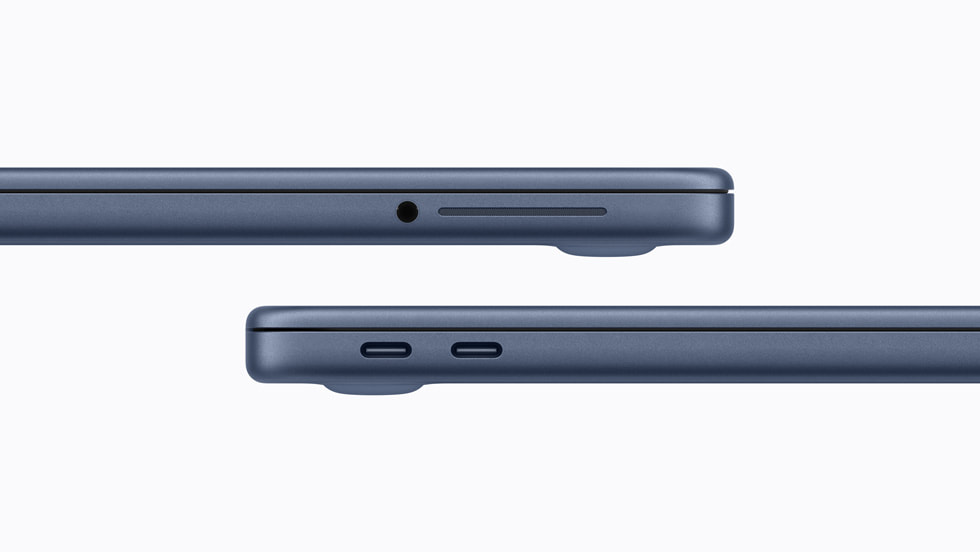
In terms of connectivity, the MacBook Neo offers two USB-C ports: one USB 3 port supporting charging, DisplayPort, and data transfer speeds up to 10 Gb/s, and one USB 2 port for charging and slower data transfer up to 480 Mb/s. There’s also a traditional 3.5mm headphone jack, which many users will appreciate. The device supports modern Wi-Fi and Bluetooth standards for wireless connectivity.

What the MacBook Neo does well
The MacBook Neo excels at everyday computing tasks. Web browsing, email, word processing, spreadsheets, and presentations all run smoothly on the A18 Pro chip. The device handles media consumption beautifully, with 4K video streaming running without a hitch. Video calls, messaging, and collaboration tools work seamlessly, making it suitable for remote work and online learning.
For creative work, the MacBook Neo can handle photo editing, including working with 100MP images. Social media content creators and casual vloggers will find it capable of simple 4K video editing with basic cuts and transitions. The A18 Pro’s Neural Engine also enables on-device AI workloads, and casual gaming is certainly possible.
Students will find the MacBook Neo more than adequate for online courses, research, and note-taking. The ability to run multiple applications simultaneously for everyday tasks means you can have Safari, Pages, and Spotify running together without issues. The seamless integration with iPhone and iPad makes file transfer and setup incredibly straightforward for newcomers to the Apple ecosystem.

Understanding the limitations
However, it’s important to understand where the MacBook Neo reaches its limits. The use of a smartphone chip, whilst enabling the attractive price point, means there are thermal and performance constraints compared to laptops with M-series chips designed for sustained workloads.
Complex video editing projects with multiple stacked layers, heavy effects, transitions, and colour grading will push the device beyond its comfort zone. Professional software developers working on large-scale coding projects will find the 8GB RAM limitation restrictive.
High-end gaming with AAA titles demanding cutting-edge graphics won’t run well, if at all. Professional audio producers working with multi-track projects and numerous plugins will also find the MacBook Neo underpowered. Heavy multitasking with multiple professional applications running simultaneously will expose the RAM limitations.
Think of the MacBook Neo as a capable everyday laptop rather than a professional workstation. It’s designed for students editing vlogs for their YouTube channel, not professional videographers working on client projects. It’s for casual photographers sharing images on Instagram, not professionals processing RAW files in bulk.
Finding the right (Apple) device for you
If your needs exceed what the MacBook Neo can offer, Apple has several alternatives. For complex video editing or 3D work, the MacBook Pro with M5 Pro or Max chips (starting at R30999) is the appropriate choice. Those requiring professional creative work with moderate multitasking should consider the MacBook Air with M4 chip (starting at R17999).
Interestingly, the iPad Air M4 (starting at R11999 for the 11-inch model) offers more raw processing power than the MacBook Neo, with a desktop-class M4 chip and 12GB of RAM. It’s particularly well-suited for powerful video editing in a portable form factor, though you’ll need to budget for accessories like a keyboard. For desktop-class performance in professional workflows, the iPad Pro M4 (starting at R17999) combines extreme portability with power.
The previous-generation MacBook Air M2, often on sale around R17999, offers better sustained performance and more headroom for demanding tasks whilst still being relatively affordable.
How It compares to the competition
At the R11999 price point, the MacBook Neo faces competition from Windows laptops and Chromebooks. According to tech reviewers from publications like Engadget and PCMag, Apple has essentially “put every $600 Windows PC to shame” with this release.
Windows laptops in the R10000 to R15000 range typically feature Intel Core i3/i5 or AMD Ryzen 3/5 processors with 4-8GB RAM and plastic builds. Whilst some may offer more ports or upgradeable storage, they generally lack the premium feel, display quality, and trackpad precision that the MacBook Neo delivers. The superior aluminium build quality, vibrant Liquid Retina display, and seamless user experience of the MacBook Neo significantly outperform similarly priced Windows machines, which often feel like afterthoughts with cheaper materials and less refined experiences.
Chromebooks in the R8000 to R12000 range offer similar pricing but run Chrome OS, which limits software compatibility. Whilst Chromebooks excel at web-based tasks and often have excellent battery life, they can’t run professional macOS applications like Final Cut Pro or the full Adobe Creative Suite. For users who need access to desktop-grade software, this is a significant limitation.
The MacBook Neo’s main advantages lie in its ecosystem integration with iPhone and iPad, superior build quality, better display with 500 nits brightness and 1 billion colour support, and access to professional macOS software. However, Windows laptops may offer more RAM options and better gaming compatibility, whilst Chromebooks are often lighter and require simpler maintenance.
ALL THAT says
The MacBook Neo represents a strategic move by Apple to capture the budget laptop market whilst maintaining the quality and ecosystem advantages that define the brand. For R11 999, it’s an excellent entry point into the Apple ecosystem and a solid choice for students, casual users, and anyone who values build quality and user experience over raw performance.
Apple is clearly playing the long game here – getting younger users and budget-conscious buyers into the ecosystem at R11 999, knowing that as their needs grow and their finances improve, they’ll likely upgrade to a MacBook Air or MacBook Pro. It’s an ecosystem entry point that also allows Apple to compete directly with Chromebooks in education and budget Windows laptops in retail.
For students on tight budgets, or anyone who’s been curious about switching to Mac but couldn’t justify spending over R20 000, the MacBook Neo removes that barrier. It’s not trying to be a professional machine, and that’s perfectly fine. What it does, it does well, and at R11 999, it does so at a price that finally makes Apple laptops accessible to the masses.
This article was not sponsored and contains no affiliate links. All opinions expressed are those of the editorial team.
Also read

Nike’s Swooshfly promises carbon-plate benefits for slower runners. Here’s what the science really says
Gerda Engelbrecht At the latest Nike launch event, the Apex and Alphafly 4 may have been the headline act, but it’s the new Swooshfly that’s stole...

Apple’s double launch: Should you upgrade to the iPhone 18 Pro now, or wait for the Duo?
Gerda Engelbrecht Apple has shaken up its traditional September release schedule, delivering not one but two distinct flagship experiences: the photog...

The art of decanting: The smart way to serve wine at its best
Gerda Engelbrecht We tested a temperature-controlled decanter from Solenco and it solved one of wine service’s most annoying problems. If you’ve e...