


Genius or Goofball? Test Your Dog’s IQ in Minutes
We like to brag about how clever our pets are – but how intelligent are they really? And can we settle this for once and all: Are dogs more intelligent than cats?
We know our dogs are intelligent as they can learn basic commands like sit and stay, develop a basic vocabulary and seems to understand human emotions like sadness. Some dogs even sense when you’re feeling ill and keep a watchful eye over you. Surely they must be intelligent?
First of all, we need to define intelligence. In The Genius of Dogs: How Dogs are Smarter than We Think, Brian Hare and Vanessa Woods argues that the most obvious sign of dogs’ intelligence is how effectively they’ve managed to survive and reproduce over millennia. You find dog breeds in every corner of the world and their numbers are still increasing.
The neuropsychologist Stanley Coren also writes in The Intelligence of Dogs that intelligence comes in many forms, even in dogs, so it’s hard to say whether one breed is “smarter” than another. Coren mentions three types of intelligence: instinctive intelligence (what a dog is bred for), adaptive intelligence (what a dog can learn by itself), and working and obedience intelligence (what people can teach a dog to do). Comparing breeds can be hard for the first two types, but there’s a wide range in brainpower among breeds in working and obedience intelligence.
Words and numbers
The average dog has the language understanding of about a 2-year-old child and understands numbers like a child between 2 and 3 years old, Coren argues. The average dog can learn 165 words. Dogs in the top 20% of intelligence, called “super dogs”, can learn 250 words, and the very smartest dogs may be capable of much more. A border collie named Chaser learned more than 1 000 words – about the same vocabulary as a 3-year-old child.
Your dog wouldn’t be able to do Grade 1 Maths, but they can count up to four or five and understand the idea of addition and subtraction. If you place two bowls of food in front of a dog, one with two pieces of food in it and the other one with four, he’ll likely choose the bowl with more pieces.
The Smartest of them all
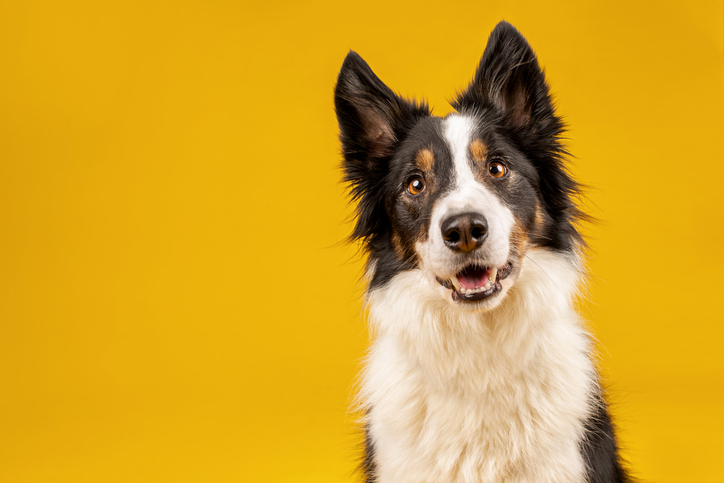
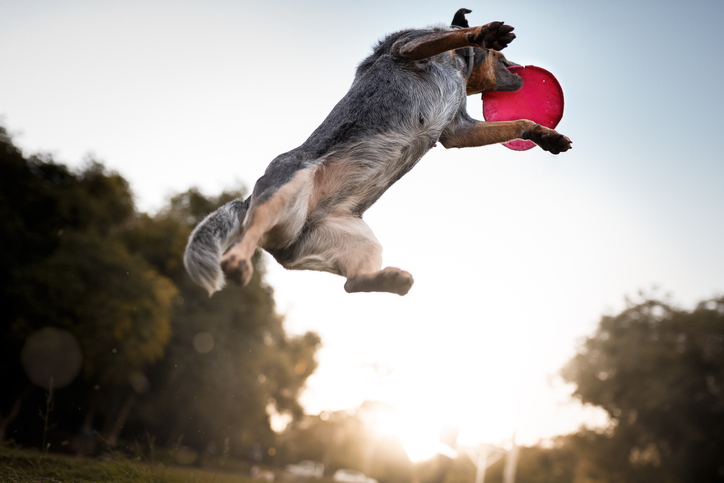
Is one dog breed smarter than another? Border collies are considered the smartest breed in terms of training and obedience, says the website PETMD.com. In a survey, 199 of 208 obedience training judges ranked border collies in the top 10. Other breeds that got high marks from obedience trainers were: poodles, German shepherds, golden retrievers, Dobermans, Shetland sheepdogs, Labrador retrievers, papillons, Rottweilers, and Australian cattle dogs.
At the bottom end of the scale you will find Afghan hounds (ranked the “least trainable breed”), the basenji, bulldog, chow chow, borzoi, bloodhound, Pekingese, beagle, mastiff, and basset hound.
Cats or dogs?
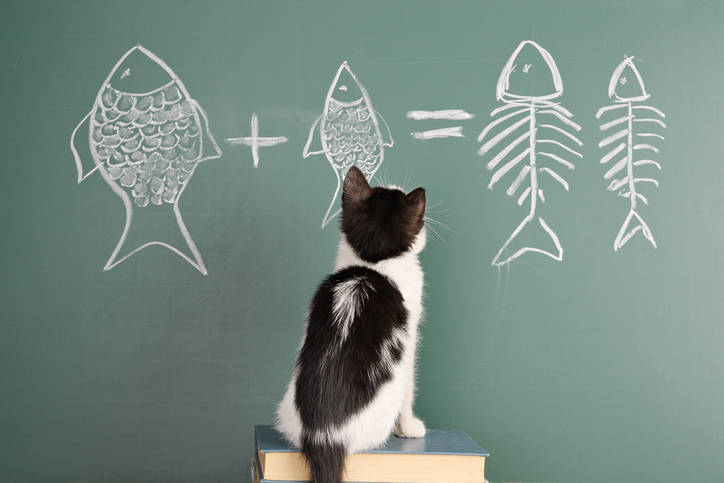
The questions whether cats are smarter than dogs have caused many fights over the years. Coren says it depends on how you define “smarter”. Cats are smarter when it comes to using their paws – like to pull strings or levers. Dogs are more trainable, more social, and more able to understand human gestures and words. Based on brain size and body size, dogs are among the smartest animals on the planet. Only humans, the great apes, porpoises, and elephants are smarter than dogs in terms of brain size.
Can you teach and old dog new tricks?
You can make your dog smarter, says the website PETMD.Com. Dogs raised in a mentally stimulating environment learn faster than dogs raised in a boring one. New experiences and challenges help new neural connections form inside the dog’s brain. Not only is it possible for old dogs to learn new tricks, it is also good for them as it hold back the mental decline that’s a part of aging.
The Hill’s Dog IQ Test
The website of the dog nutrition specialist Hill’s Pet (www.hillspet.com) provides these 6 tasks to see how trainable your dog is. It tests the dog’s ability to learn and retain information as well as its capacity for reasoning and problem solving.
- Place a large towel or blanket over your dog’s head. This task will provide insight into your dog’s ability to solve problems.
Scoring: Give your dog three points if he figures out how to free himself in under fifteen seconds, two points if it takes fifteen to thirty seconds, and one point if it takes more than thirty seconds.
- Place two or three empty buckets or cups upside down in a row. While your pup watches, place a treat under one of the containers. Distract him for a few seconds before allowing him to look for the treat. This test will help determine how well your dog can learn and retain information.
Scoring: Give him three points if he goes straight to the container hiding the treat, two if he checks one empty container before finding the right one, and one point if he checks both wrong containers before locating the treat.
- In a room where your pup has a favourite spot to lounge, send him out of the room and then rearrange the furniture. This task is designed to test his reasoning and cognition.
Scoring: Let your dog back into the room. If he goes right to his favourite spot, give him three points. Give him two points if he takes a short time to investigate before finding his spot. If he gives up and picks a new spot, give him one point.
- Underneath a piece of furniture (low enough to the ground that only your dog’s paw will fit), place a treat within paw’s reach. This task will test your dog’s reasoning and problem-solving skills.
Scoring: Give your pooch three points if it takes him under a minute to reach for the treat using only his paw. If he tries to fit his head into the space first, or uses both his nose and paws, give him two points, and one point if he gives up entirely.
- At a time when you don’t normally take your dog for a walk, pick up his leash while he’s watching. This task tests your dog’s ability to make and retain associations.
Scoring: Give your dog three points if he immediately gets the hint and becomes excited; two points if you need to walk to the door before he gets the message that it’s time to go somewhere; and one point if he doesn’t seem to understand what’s going on.
- This one takes a little extra work on your part. With a piece of cardboard five feet wide and too tall for your dog to see over when standing on his back legs, build a barrier by attaching each end of the cardboard to a box big enough to support it. In the center of the cardboard, cut a rectangle about three inches wide that starts about four inches from the top and ends about four inches from the bottom. Toss a treat behind the barrier, allowing your dog to watch where it falls through the window you cut into the cardboard. This task will help measure reasoning and problem-solving ability.
Scoring: Give your dog three points if he takes 30 seconds (or less) to figure out he needs to walk around the barrier to get the treat. If he takes longer than 30 seconds to figure it out, give him two points, and one point if he tries to climb through the window or bulldoze his way through the barrier instead of going around.
How well did he do?
More than 15 points: Congratulations! Your dog is a genius.
13-15 points: Your dog’s not Lassy but he’s still a smart cookie.
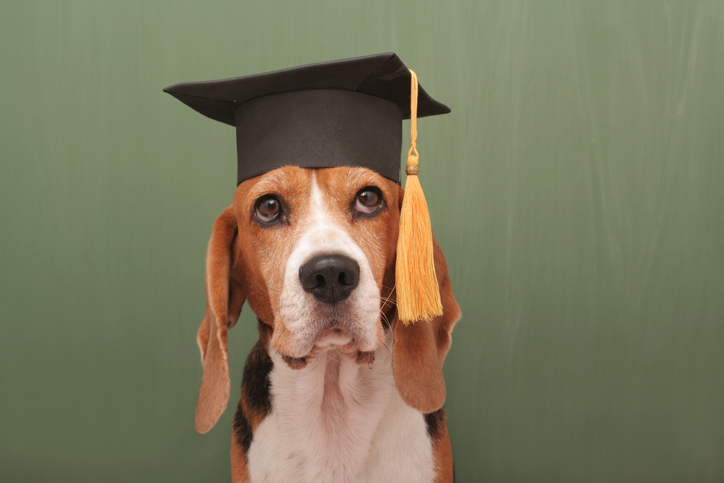
9-12 points: Your dog won’t be the class valedictorian but he’ll get by okay.
5-8 points: Your dog might need some assistance figuring things out and getting things done.
1-4 points: It doesn’t take brains to give cuddles and kisses—that’s all that really matters, right?

Jean Marie Bauhaus writes on hillspet.com that dogs that do well on these types of tasks tend to be highly trainable and make great candidates for service dogs. But these tests aren’t infallible. Some dogs are simply stubborn, and their lack of cooperation probably has nothing to do with their intelligence. Some also say the smartest dogs are the ones that wait patiently for their owners to fork over a treat that they don’t have to work for. But even if your dog is not the sharpest tool in the shed, that does nothing to diminish the love and loyalty he has for you.
Coren also stresses that you shouldn’t put too much emphasise on a dog’s intelligence. “People ask me why I have a beagle,” Coren says. “Beagles are seven from the bottom in terms of obedience training … [but] I have nine grandchildren, so I needed a dog who’s friendly and sociable and relatively unbreakable … it’s actually an advantage for me that this dog doesn’t remember that that kid over there is the one who pulled his ear an hour ago.”
His advice is: If you want a working dog, pick a brighter breed. But smart dogs can be more demanding; they tend to need more attention and may be more high-strung and quicker to react in both positive and negative ways. If you don’t need a working dog, stick to one who can give hugs and sloppy kisses.
Sources: petmd.com; hillspet.com; PETSMD; The Genius of Dogs: How Dogs are Smarter than We Think; The Intelligence of Dogs
Also read

Ticks and fleas are killing your pets – and are dangerous for your family
If you think ticks and fleas are just an itchy nuisance, think again.
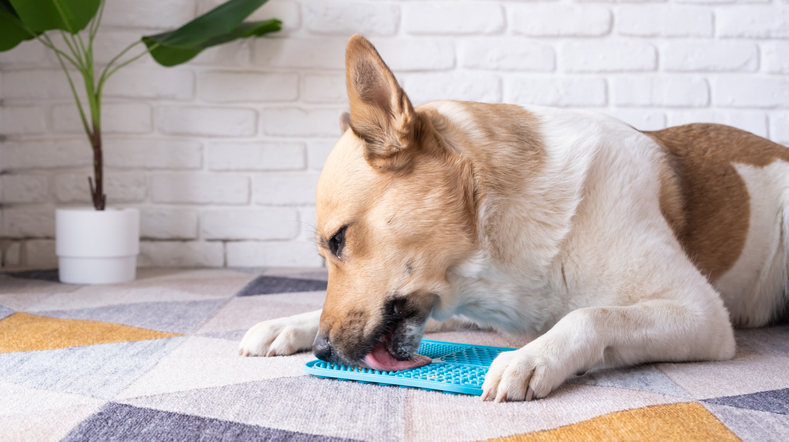
Your dog is not naughty – He’s just bored, and this inexpensive tool can fix it
Coming home to chaos isn’t fun – chewed shoes, destroyed cushions, and a dog who looks guilty the second you walk through the door.
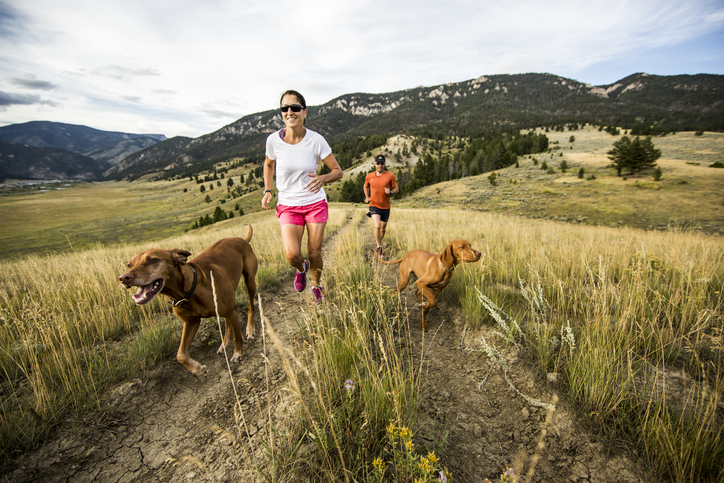
Looking for a running buddy? These 6 Types of Dogs are BEST
Some pups were bred for speed; others are better suited to a slow and steady pace.