

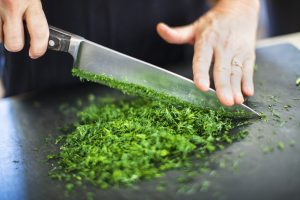
The Cutting Edge: 3 knife sharpeners put to the test
There’s nothing more frustrating than a dull knife in the kitchen. Blunt blades require more force to cut, which means they’re far more likely to slip – a real hazard when you’re chopping vegetables or slicing meat. Whether you’re a home cook preparing weeknight dinners or a serious chef who spends hours at the stove, working with sharp knives makes all the difference to both safety and performance.
A good knife sharpener can give your trusty blades a new lease on life, making them feel almost brand new again. From simple pull-through sharpeners to traditional whetstones, there’s no shortage of options – each with its own strengths and trade-offs. Choosing the right one depends on your budget, your skill level, and what kind of knives you use most. This guide compares three popular sharpeners available on Takealot to help you make an informed choice.
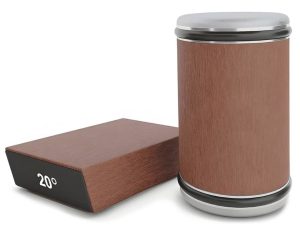
This sharpener uses a tumbler rolling design with a diamond-coated sharpening surface and a stainless-steel helix disc that removes burrs for a refined edge. It supports two sharpening angles – 15° (for Japanese/precision blades) and 20° (for traditional Western knives) – making it versatile across a range of kitchen and outdoor cutlery. The magnetic base is designed to hold the knife blade in place while you roll the sharpening disc across it.
Pros:
- Diamond-coated surface is extremely hard and durable – one of the most effective sharpening materials available.
- Dual-angle support (15°/20°) covers both fine Japanese-style and standard Western knives.
- Compact, lightweight, and portable – easy to store or take on the go.
- No power, cords, or oil needed – purely manual.
- Gift-ready packaging.
Cons:
- The magnetic hold is the most frequently criticised feature. Several users report the magnet is too weak, causing blades (especially smaller pocketknives) to slide during sharpening.
- Only works well on straight-edged knives – curved or tapered tips don’t maintain consistent contact with the rolling disc.
- Takes practice to get the technique right; beginners may struggle.
- More expensive than basic pull-through sharpeners.
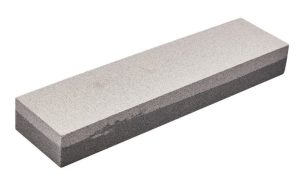
This is a corundum (aluminium oxide) whetstone – the traditional sharpening approach used by chefs and knife enthusiasts worldwide. The stone is designed to be used either dry or lubricated with water (no expensive honing oil required). It’s a multi-purpose tool that can sharpen kitchen knives, cleavers, hunting knives, pocketknives, lawnmower blades, axes, hatchets, shovels, and other cutting tools.
Pros:
- Extremely versatile – works on virtually any bladed tool, not just kitchen knives.
- Corundum is resistant to corrosion and highly abrasive, providing a fast and effective grinding surface.
- Can be used dry or with water – no oil needed, keeping costs and mess down.
- Very affordable – one of the cheapest sharpening options on the market.
- Gentle on blades; doesn’t remove excessive material the way powered or carbide sharpeners can.
- Teaches proper sharpening technique, which gives the best long-term results.
Cons:
- Requires skill and practice – unlike pull-through sharpeners, there’s a learning curve to maintaining the correct angle and pressure.
- Slower than other methods – sharpening a very dull knife can take 10 – 20 minutes.
- Soaking may be required before use (some corundum stones need 15 – 20 minutes of soaking in water).
- No built-in angle guide, so consistency depends entirely on the user’s technique.
- Bulky compared to compact pull-through sharpeners; less convenient for quick touch-ups.
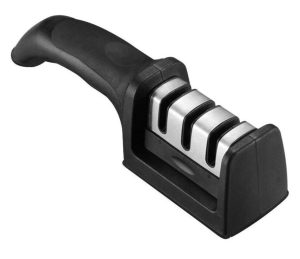
Stage Manual Kitchen Knife Sharpener (Non-Slip Handle)
This is a compact, pull-through sharpener with three dedicated sharpening stages. Stage 1 uses tungsten carbide blades for coarse grinding – ideal for restoring very dull or damaged knives. Stage 2 uses ceramic rods for fine grinding and honing to refine the edge. Stage 3 features diamond-coated rods specifically designed for ceramic knives. It has an ergonomic soft-grip handle, a non-slip rubber base for stability, and measures roughly 20.5 × 4.5 × 7.5 cm – small enough to store in a drawer.
Pros:
- Three stages cover everything from repairing damaged blades to fine honing to sharpening ceramic knives – all in one tool.
- Extremely easy to use – just pull the knife through each slot 3 – 5 times in one direction. No technique or skill required.
- Fast results – blades can be sharp again in seconds.
- Non-slip base and ergonomic handle make it safe and comfortable to use.
- Very affordable – one of the cheapest three-stage options available.
- Compact and lightweight – easy to store or travel with.
- Works for both left- and right-handed users.
Cons:
- Pull-through carbide sharpeners remove more material from the blade than whetstones, which can shorten the blade’s lifespan over time.
- Only suitable for straight-edged knives – not designed for serrated blades.
- The fixed angle means you can’t customise the sharpening angle to suit different knife types.
- Build quality on budget models can be inconsistent – the tungsten carbide and ceramic rods may wear out or become misaligned over time.
- Not suitable for very expensive or premium knives where you’d want precise angle control.
- Not dishwasher safe – needs manual cleaning.
Summary Comparison
| Feature | Rolling Sharpener | Whetstone Stone | 3-Stage Pull-Through |
| Ease of use | Moderate | Hard (needs skill) | Very easy |
| Edge quality | Good | Best | Fair to good |
| Versatility | Moderate | Highest | Moderate |
| Price | R269 | R39 – R99 | R49 – R99 |
| Best for | Enthusiasts wanting precision | Serious cooks willing to learn | Quick, everyday home use |
- This article was not sponsored but contains affiliate links. If you make a purchase through these links, ALL THAT will receive a small commission at no extra cost to you. All opinions expressed are those of the editorial team.
Also read
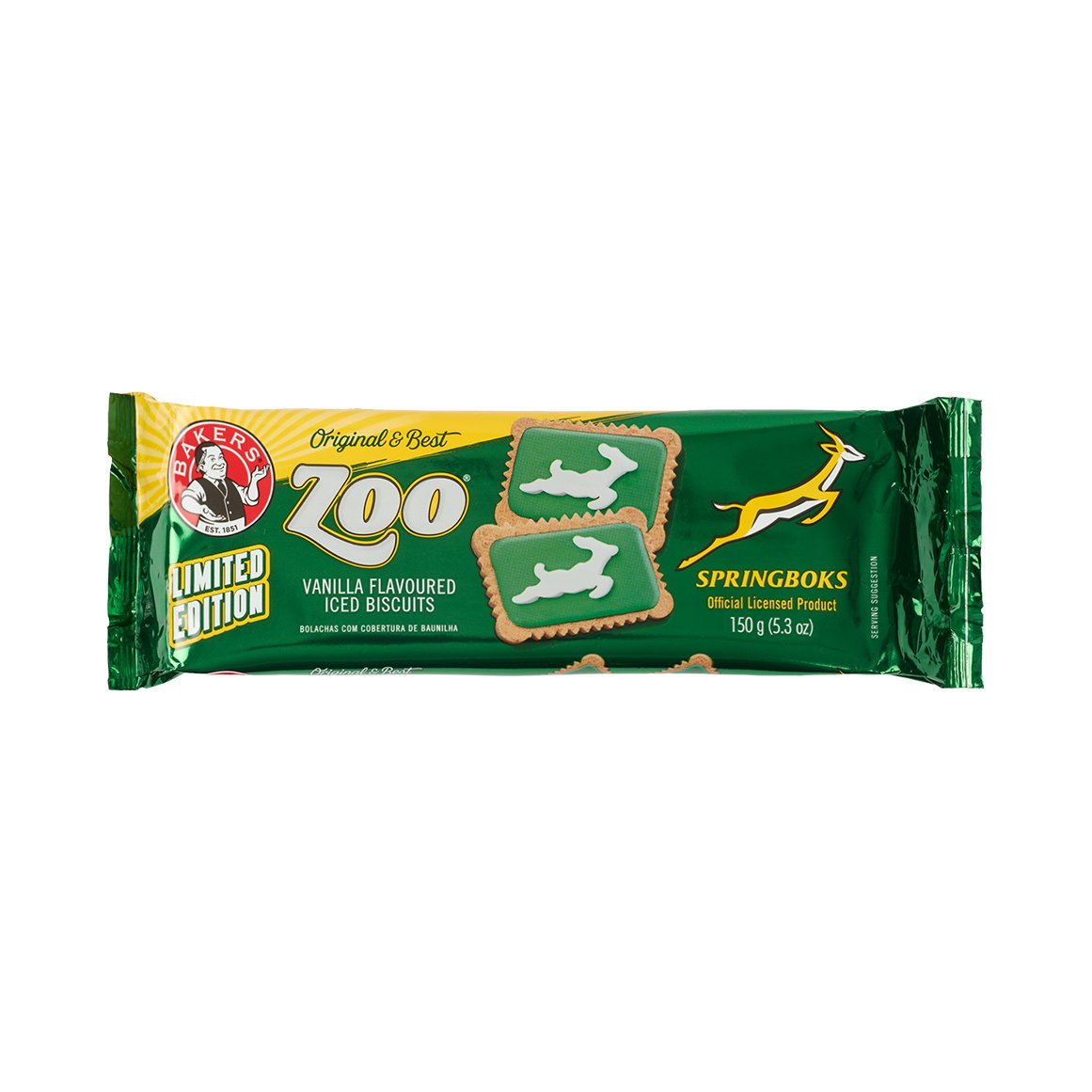
The Ultimate Heritage Day Teammates: Iced Zoo Meets the Springboks
When it comes to celebrating South African heritage, few things bring us together quite like rugby and nostalgia.

The art of decanting: The smart way to serve wine at its best
Gerda Engelbrecht We tested a temperature-controlled decanter from Solenco and it solved one of wine service’s most annoying problems. If you’ve e...

Seven wines that’s perfect for this time of year
Spring has arrived, and with it comes the urge to shake off winter’s heaviness and reach for something lighter, brighter, and altogether more cheerful in the glass.